Showing posts with label Dodge. Show all posts

Thursday, June 26, 2025

1979 Dodge Lil Red Express Truck - Holy Jimmy Carter, Batman


When I was growing up on Long Island back in the '70's, no one drive pickup trucks as daily drivers. Tradespeople might have but work-a-day hacks? Nope. Sure, some did, one guy in my friend group had a small Toyota pickup but he wasn't originally from the Island, so he got a hall pass. Anyone else who dared to drive "a truck", was gently chided as being a hillbilly, bumpkin, hayseed or worse yet, a farmer. So, when Dodge came out with their "Lile Red Express" in 1978, they looked to me like someone wearing a Batman costume to church on Sunday. Our subject here is a 1979. 

We dig beneath the shiny red paint, pinstripes, and good grief, are those (factory) exhaust stacks?! And we find there was a (fairly) sound reason Dodge rolled these out. 


Dodge's (Chrysler's) problems began long before the government backed bailout, and Lee Iacocca came to the rescue. Years of product planning gaffes and internal strife left the company with little money for product development in a day of increasingly strict emissions and safety mandates. The energy crisis of 1973 only adding to their misery since most of their models were older, fuel-inefficient designs. 


So, Chrysler had no choice but to resort to repurposing existing models. Change the model nameplate here, gussy up the bodywork there. Worked for a little while too before cork came out of the beer can.  


This included not only their car lines but their light trucks as well. Thus, in the mid-1970's, Chrysler started peddling "adult toys" which weren't much more than lightly disguised versions of trucky stuff they already had in showrooms. The Lil Red Express was one of those "adult toys". 


Exploiting a loophole in the EPA's emissions regulations regarding light trucks with a GVWR (Gross Vehicle Weight Rating) of over 6,000-pounds, Dodge was able to slip Chrysler's "E58", 360 cubic-inch V-8 "cop engine" into these things with some perfectly acceptable modifications like the cam from their old (and awesome) 340 V-8 that helped the Copper make 225-horsepower (net) and 295-pounds of torque. Along with their stump pulling 3.55 "Sure Grip" inside their heavy-duty 9 1/4-inch pumpkin, this thing went like (relative) stink. All had Chrysler's wonderful 727 Torque Flite automatic. 


I mean, zero-to-sixty in 7.5-seconds and the quarter mile in 15-seconds kind of stinky. That this could keep up with Chevrolet Corvettes, Camaro Z28s and Pontiac Trans Ams of the day probably says more about those cars than how fast this was, but still, pretty impressive. Even today, you drive anything that can churn those kinds of numbers you wouldn't say it was underpowered. 


Also, with big rig trucks as popular as they were back then, well, us myopic, stuck-up Long Islanders didn't care about them but what did we know, the factory stand up exhaust pipes or "stacks" and step side rear box added to the "truck" aesthetic. The bed and tailgate trimmed in oak, along with the step side design reduced their practicality, and made as much sense as Long Island having an NHL franchise as well.  


This popped up on Facebook Marketplace recently about an hour south of Erie, Pennsylvania with an asking price of, holy Jimmy Carter, Batman, $29,500. 


Friday, June 2, 2023

1983 Dodge Rampage - City Slicker


The most famous and, dare I say, seminal of Chrysler K-cars was their game changing mini-van introduced in 1983. Just-like-that, breeding Boomers had their family truckster and the rest is history.  On the other side of the sales success spectrum were Chrysler's K-car based, 1982-1984 "coupe utilities"; Plymouth called theirs "Scamp" (1983 only) and Dodge called theirs "Rampage". Our Facebook Marketplace 1983 Rampage here hails from bucolic Greenville, Pennsylvania nestled on the Ohio-P.A. border roughly an hour northwest of Pittsburgh and 90-minutes southeast of Cleveland. Purportedly all of 17,000-miles on it's forty-year-old analog ticker. Asking price is negotiable. 


If I recall correctly, I believe my knee-jerk reaction to these things when I first saw one back in the day was something along the lines of, "what the f--k is that?" Please understand that I grew up in a bedroom community of New York City where such things like this were about as common as a seeing a cow in a supermarket. Well, a fully assembled, alive and breathing cow and not one or several already dismantled and ready for grilling. If I didn't "get", understand or appreciate the virtues of pickup trucks or anything construed as midwestern, again, back then, highly unusual to see a pickup used as a daily conveyance where I come from, to say nothing of how dazed and confused I was regarding Chevrolet El Caminos\GMC Sprints and Ford Rancheros, imagine how I felt about these things. 

All I saw was a K-car pretending to be an El Camino. Nothing more and probably a whole lot less. Well, it was considerably less big than an El Camino or Sprint of the era; Ford got out of the Ranchero business after 1978 although they did commission a number of Fairmont's for custom conversion to  "pickup cars" from 1979-1982. Wannabee city-slicker me not seeing these things for what they were really trying to be - an affordable, efficient, and quite practical utility vehicle with a dash of sporty panache. 


Based on the bones of the newly freshened for 1982 Dodge Omni O24 Chrysler dubbed, "Charger", our Rampage here uses the Charger's comely front end with a unique utility box aft of what would be the Charger's center-post or B-pillar. The unit-body riding on a slightly elongated Charger chassis with the Charger's front coil struts and an exclusive leaf spring\shock absorber rear suspension. With a tubular rear axle, Chrysler claimed a 1,000-pound payload capacity and 750-pound towing capacity. This just in - you ain't towing the camper with this thing. 

Propulsion was provided by a Chrysler-built, 2.2-liter, overhead-valve, inline-four-cylinder engine making 84-horsepower. Sorry, no pictures of that autobahn scourge in the ad. Our red head here has Chrysler's slushy but rugged, three-speed A413 transmission derived from the Volkswagen A404 box Chrysler used in the Dodge Omni and Plymouth Horizon going back to 1978. Four- and five-speed manuals were also available. 


Although weighing just 2,400-pounds, performance was best described as leisurely to the tune of zero-to-sixty in 16-seconds. Whoa. Most vehicles today can do the quarter-mile in 16-seconds or less. Then again, it was the early '80's, most everything was grossly underpowered. Chrysler claimed 25-mph city, 40-highway. Your mileage may vary, see dealer for details. 

Too small for pickup truck aficionados and not, I guess, bizarre enough for fans of the VW Rabbit based coupe utility or Subaru Brats of the day, despite high critical praise from auto scribes, Chrysler moved just over 37,000 Rampages in just three model years of production. Meaning, our little front-wheel-driving coupe utility here is quite rare and unique. 


Despite my misgivings at first, I've actually always thought these things quite cool looking. And if I had the room and\or need for something wholly practical and not wanting to spring for an SUV or "real" pickup, this little Rampage here might be the ticket for me. I'm not quite there yet, I don't know if I ever will be to be quite honest, but it's nice to see how much my taste in things as evolved from the cloistered myopia of my youth where it seemed anything remotely construed as midwestern was verboten. 


Tuesday, September 21, 2021

1969 Dodge Charger - Good Ole Boy


I can't complain about how insane prices are for used cars these days seeing I just sold my somewhat rusty but still very solid 2006 Chevrolet Tahoe LT with more than 153,000 on its clock for $6,000. Still, I find the $25,000 asking price for this 1969, non running and non-numbers matching, 1969 Dodge Charger R/T to be laughably absurd. 


I can't fault the poster of the ad on Facebook Marketplace for asking that amount but I would seriously question the mental health or business acumen of an individual who would spent that kind of money for this. "Rollers" are hard to put a price tag on and this one might be better than most but I have to imagine this one is overpriced. Make that way overpriced. 


Unless the buyer can do all of the restoration work themselves, factoring in the cost of labor and parts, this is going to be one very expensive restoration. Then, possibly, whomever buys it might have a gem on their hands that might be worth around $60,000. Sorry, that's a big if. 


Resto-rat-mod this cost effectively and it would be something unique and interesting. Not every old car that's beat to death needs a Concours quality restoration. I don't get spending $60,000 to make $60,000 or make something worth $60,000 that'll be something you'd be afraid to drive. Flipping cars is a dicey game too - especially bombs from up here that are rusty. Like this thing is. 


I get that on a list of top-ten "gotta have it" muscle cars from back in the day, one of these would be sitting at or near the top of it. But man, it needs everything. 


Dodge's first Charger in 1966 looked more like an over-sized AMC Marlin than a competitor to peel buyers away from any GM muscle car; Dodge didn't get a "pony car" until 1970.  Fastbacks in general and in particular on (nearly) full-size cars are tough putts and the '66 and '67 Charger is case in point. I mean, this thing looks cross between a station wagon and a Coronet with an Oldsmobile Toronado's tumble-home thrown in. 


Dodge built the Charger on Chrysler's B-body platform that traces its heritage (or infamy) back to Chrysler's abortive 1962 downsizing of Dodge and Plymouth models. When Chrysler "upsized" in 1965 they kept the B-body around as a defacto intermediate. 


After two years of stubbing their bumpers, they got it oh-so-right in '68 with these beauties. Being featured in the 1968 Steve McQueen cop movie "Bullitt" may have had something to do with popularizing them as well. Sales stunk for the '66-'67 models but they were actually quite good in 1968 and 1969. 


Further helping to popularize these cars is that they were featured in the TV show, "The Dukes of Hazard" that ran from 1979 through 1985. Legend has it anywhere from 255 to 325 1968 and 1969 Dodge Chargers were used in the show's production. 1970 Charger's, that do not have the '68 and '69 Charger's "sugar scoop" or "tunnel-ram" rear window treatment, were not used although the Charger's featured in 2005 movie were all 1970 Chargers. 


Ok, so, the details on this thing: apparently this is a "real" Charger (whatever that means), the engine is "correct" but not original nor is it running, the paint is original and remarkably so, trunk pan is rotted out, rear quarter panels are shot, rear frame rails need work, driver's foot well is "Fred Flinstone'd" but the torsion bar mounts are supposedly in good shape. Oh, and it's filthy and the wheels are historically incorrect. 


Aside from all that, Mrs. Kennedy, what did you think of Dallas? 


If you know all that and still think this a bargain and you actually know better than I do, perhaps I'm the moron. Hey, that's a distinct possibility but in this case, I don't think so. 


Wednesday, March 3, 2021

1962 Dodge Dart 330 - Mad Men


Back when I was growing up on Long Island, the folks who lived across the street from us had a 1962 Dodge Dart just like this but it in a darkish, almost military like green-gray. And I loved it. I think my affection for it driven equally by its distinctive design as well as for the fact that mechanically curious eight or nine year old me bolted like a Pavlovian dog across the street at the first utterance of it's hood-springs clanging like small church-bells whenever the hood was opened. Which, as I recall, was quite often since it broke down so often. 

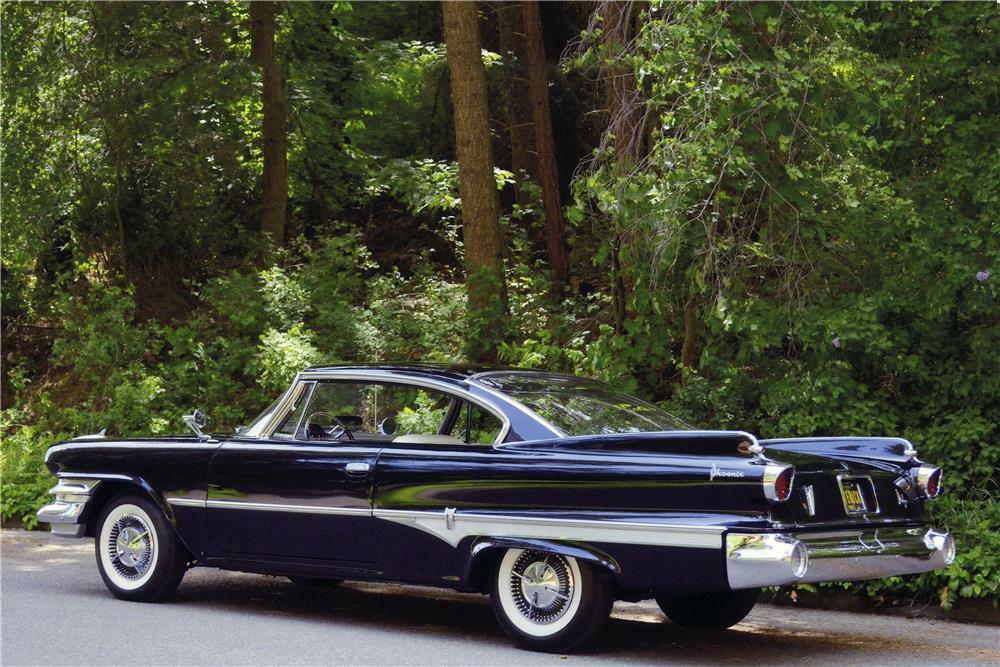
Now, you may be like, "I thought Dodge Dart's where small cars...what is this?" Well, you wouldn't be wrong, exactly, as for many years a Dodge Dart did denote a small car, including most recently from 2012-2016. From 1960 through 1962, however, Dodge Dart meant big. "Dart" first appeared in the Dodge lineup in 1960 on Dodge's least expensive standard-size line below the also freshly chirtened for 1960 Polara and Matador lines. For whatever reason the slightly smaller Plymouth body-shell was used on a whole sub-series of Darts including, from top of the heap to "price leader", the Dart Phoenix, Pioneer and Seneca. Above is a 1960 Dart Pioneer festooned in all it's over-decorated, 1950's-esque finned and chromed glory. In case you're wondering, these cars were sales duds. 

What makes our '62 Dart here really special is it's part of Chrysler's infamous 1962 downsizing of Dodge and Plymouth "standard-size" models. Wait, downsizing in the 1960's? Wasn't that a late 1970's thing? Well, the answer to that question is the stuff of legend. 


The story goes that at an industry social function some time in 1960, let's imagine it was like a scene out of "Mad Men" with everyone dolled up, smoking, flirting inappropriately and getting plastered, William Newburg, freshly minted president of Chrysler, overheard Chevrolet executives discussing their new downsized lineup for 1962. Lest be made to look bad by Chevrolet, being "Mr. Proactive", Newburg promptly ordered the already finalized for production 1962 Plymouth and Dodge standard-sized models be scrapped for new and smaller ones. Chrysler division and Imperial models where spared his wrath. 


Again, like a scene straight out of "Mad Men", the problem was Newburg's intel was either wrong or he misinterpreted what he overheard in between noshes on chipotle crab corn dip. Not only was Chevrolet not downsizing, they were introducing an entirely new line of compact cars for 1962 to be known as the Chevy II. And...what resulted from a much-hurried hard-reboot at Dodge and Plymouth left a lot to be desired design wise. Although, frankly, you can blame nostalgia, perhaps, for some of my affection for these bug-eyed beauties but...I still find them oddly handsome and sized just right. 


With sales tanking, Dodge hastily rebadged the still ginormous Chrysler Newport (nee DeSoto) as the Dodge "880" in mid model-year 1962, technically making our Dart here a mid-size car. Year-to-year sales cratered by as much as twenty-five percent for Dodge (and Plymouth) and remarkably, Newburg didn't get his knee-jerk arse fired over it. No, sir. What did him in shortly after the introduction of these cars was an embezzlement scheme involving parts vendors that almost killed off the whole company. Nice. Chevrolet sales went up for 1962 almost as much as Dodge and Plymouth sales went down meanwhile the erroneous and clandestine info gleamed after two or three straight-up Manhattan's wreaked havoc on The Chrysler Corporation for the better part of the next twenty-years. Care for another baked pear, Mr. Newburg? 


The reaction to these cars was so bad that an immediate and near comprehensive do-over was ordered for 1963. Viewed as wildly successful based on the meteroic sales increase for 1963 vs. 1962, the reskin took a lot of the "what-is-that?" out of these designs but also, subjectively, whittled away most if not all of the distinctiveness of these cars that impish me loved; I still do. Again, my fondness for these might be somewhat skewed by my childhood facination with them but I don't see what folks see or didn't see in them. Crazy how fond we are of stuff from our childhood. Probably didn't matter what the car was that was across the street with its hood up, whatever it was would be golden through my eyes then as now.  


Dodge cleaned up their Dart model naming scheme for '62 as well replacing the silly Phoenix-Pioneer-Seneca non-sense with "Dart 440", "Dart 330" and just plain old "Dart". 330 and 440 having nothing to do with engine size which is somewhat ironic seeing that Chrysler introduced a 440 cubic-inch V-8 in 1966. 


Another silver lining was that Chrysler engineers used an enlarged version of their new for 1960 and quite capable "A-body" chassis that underpinned the compact Lancer and the "Valiant by Chrysler". This chassis went onto be called the "B-body" and went onto a fairly stellar and long career underpinning many a Dodge and Plymouth, some choice Chrysler branded models too, in the years to come. The Imperial division, which had been around since 1955, was dropped after 1975.  


You're not alone thinking our '62 here looks like a puffed up Lancer because, essentially, that's what it is. Although, it's funny; whereas the little Lancer, that would be the white car, I think homely as sin, the larger Dart I find to be a much better looking car. Even in red. Wouldn't be the only time a design looked better on a bigger canvas. Inverse is true at times but rarely. 

The Dart nameplate was moved down to what they had been calling the Lancer for 1963 and there it remained, on smaller cars, through the end of the A-body's rather lengthy run through 1976 when it was replaced by the "F-body", F is not for fun, incidentally, Dodge Aspen. What had been the 1962 Dart series was rebranded as "Polara 500", "440", with no Polara pre-fix, as well as a "330". . 


That family across the street didn't have that Dart for long. The father and his sons were mechanics and many cars that popped up in their driveway were beaters they'd repair and sell.  I don't recall what came next in the never ending driveway turntable of cars they had but that Dart has sure stuck with me.