Showing posts with label Chrysler. Show all posts

Friday, September 3, 2021

1983 Chrysler New Yorker Fifth Avenue - Sufficient


I find most four-door sedans as interesting as a dishwasher. This 1983 Chrysler New Yorker Fifth Avenue's no different but seeing the shape it's in and it's reasonable asking price of $4,500, my latest Facebook find here deserves a closer look. 


For 1983, Chrysler had two New Yorkers, our blue-on-blue subject and these front-wheel-drivers on a stretched wheelbase K-car platforms they called the "E-body". Why they named these cars "New Yorker" and not something different is a question even Ricardo Montalban couldn't get a direct answer for.  And if I'm ambivalent towards today's subject I was flat out disgusted by these tarted up K-car's. Sorry, "E-cars". 


"Fifth Avenue" was first found on 1979-1981 "R-body" New Yorker's and was a trim package featuring a unique padded "landau" vinyl top with "opera windows" that opened with the rear doors, two-tone beige exterior finish with colored-keyed (matching) interior with tufted, wait-for-it, "Corinthian Leather". Hard to believe these oafs had trouble finding buyers, y'know? The Chrysler "R-body", incidentally, was a lightly updated "B-body" which not only was Chrysler's previous intermediate sized chassis, it had its roots going back to Chrysler's infamous 1962 downsizing of Plymouth and Dodge models. 


Starting in 1982, what had been the Chysler LeBaron four-door, based on an updated Chrysler "F-body" chassis they dubbed "M-body", became the Chrysler New Yorker. Sadly, only four-door sedans where offered whereas the LeBaron had been offered in coupe and station wagon as well as a four-door. For '83, these cars were given the suffix "Fifth Avenue" to make the distinction between them and the front-wheel-drive New Yorker. Mercifully, it was only for 1983 as these cars where simply known as "Fifth Avenue" from 1984 through 1989. 


Not surprisingly, or surprisingly given the amount of effort Chrysler put into the E-car New Yorker, sales for these quite good reaching a high of just under 110,000 for model year 1984. Not bad for recycled platform that was for all intent and purposes pushed to the back of showrooms as the new kid was  brought in. That new model that was outsold most years by these cars. Good going, gramps. 


Suffice to say most of the buyers for these cars were older clientele who either abhorred change, embraced the "traditional" styling and engineering of these cars or didn't care for the awkward, angular lines of the K-car New Yorker. 


The hemming and hawing of nameplates wasn't unqiue to Chrysler either. GM and Ford did similar on  on their luxury flag ships back then as well. Fleetwood, Fleetwood Brougham, Continental Town Car, Town Car etc. We're also talking about an era that "New Coke" debuted in which was subsequently sold side-by-side with "Classic Coke" not long after. The 1980's were known for many things; intelligent marketing practices not one of them. 


So, in a used car market that is absolutely bonkers with rusted out, unrestorable junk selling for thousands of dollars, it's nice to see something that's in great shape priced appropriately. I don't like this car at any price but that's not to say you or someone else wouldn't. 


My time spent behind the wheel of one of these years ago was pleasant enough. It checks the boxes on a number of cliched luxury car styling themes and cues going back to before World War II. Upright, boxy styling, they're actually quite large at nearly 207 inches long although they're diminutive compared to even the R-body New Yorker. They had fancy looking interiors. rear-wheel drive, a heavy, isolated ride and of course a god's green earth V-8. 


In this case a 318 cubic-inch Chrysler V-8 fed with a two-barrel carburetor and controlled by the last version of Chrysler's lean-burn system. Net brake horsepower was 130 with 230 foot-pounds of torque. That was not a lot then and is all but laughable now but then again, it was a time before fuel-injection became the norm. And in a car weighing just shy of 3800 pounds, performance was sedate if not, in Rolls-Royce vernacular, "sufficient". 


Sufficient being fancy talk for "slow".  

This car is or was located in Willoughby, Ohio a stone's throw east of Cleveland. Comment below if you're interested and I'll do my best to hook you up. 


Monday, May 24, 2021

1972 Chrysler New Yorker - Gotta Hand it to Chrysler


Another day and another Facebook Marketplace gem. Although I rank Chrysler's 1969-1973 "fuselage" designs far below even Ford's of this era, this 1972 Chrysler New Yorker is worth a minute or two of our time. After all she's a hardtop (!) in great condition, it's for sale in Detroit - one of my favoirte cities on earth and the owner is asking just $5,000 for it.  Is that bargain basement asking price enough for me to see past its slab-sided awfulness and that it's a four-door? Of course not...but let's kick the tires anyway 'cause that's what we do here. 


Chrysler referred to their 1969-1973 full-size cars as "fuselage" because the body was meant to emulate that of an aircraft; as if John Doe "buying public" knew what that meant or gave a hoot.  The chrome trim on the bottom of our '72 here and the vinyl top mask the subtle cylindrical shape of the car but it's there if you look hard enough. I only see it when it's pointed out to me and I still think it, meh. 


This is a great shot posted by the seller and shows off just how big these things are in front of the dashboard.  In addition to their ungodly length, they're also impossibly wide; I learned to drive in frieghters like this and I was terrified by them. If you've ever driven a car this big you know they're a handful. The tips of the front and rear passenger side fenders are so far away from the driver they might as well be across the river in Canada. 


The engine in our '72 here ginormous as well. And ineffecient. This is Chrysler's famed although smogged up 440 cubic-inch V-8. Combine this beast with the car's barn-door aerodynamics,  two-ton plus curb weight and a final drive ratio perhaps as low as 3.23:1, more like 2.94:1, and you got an old fashioned gas guzzler here. Hauling this back to Cleveland from Detroit might run me more than hundred bucks seeing that it might get nine, ten miles per gallon highway. That would be with the air-conditioning off. 


But who needs air conditioning when you have a hardtop? Drop all four windows and you have mother nature's evervesnance cascading through the cabin. Well, more like ripping through it. Better have everything including the baby strapped down since with the windows open, note the rear door windows go all-the-way-down, the gael force winds swirling through the car will blast anything not velcroed right onto the interstate. 


Oh, domestic dashboards of the '70's. Just like GM and Ford, Chrylser really cheaped out on interior detials with these cars. The switchgear is garbage; hollow, life-less knobs that feel like they're going to pop off in your hand as you use them. You'd find more engaging button "snick-snack" on light switches from Home Depot. Any wonder why luxury car buyers were so enthralled by the imports back then? 


Chrysler's reboot for 1974 resulted in some of my favorite designs of the era although they were derivatively styled; Chrysler making better looking Cadillac's Ford or GM for that matter did. Poor, scandel ridden Chrysler's timing was horrendous. Longer, wider, heavier and even thirstier cars launched to replace this leviathan just as the first gas-crisis hit. This thing is bad enough on gas - the cars that replaced these were even worse. 


Gotta hand it to Chrysler, though. As polarizing as these designs were, while Ford chased after GM designs with varying degrees of failure, Chrysler's of this vintage looked like nothing else available at the time. Doesn't mean I have to like it. Cheapo asking price and all. I know if I sprung the five-grand or so for it I'd be kicking myself that that money would have been better spent on a Cadillac of the same vintage. Coupe deVille of course. 

Tuesday, April 6, 2021

2008 Chrysler Crossfire - Smooth Jazz


I found this 2008 Chrysler Crossfire for sale recently on one of my "cheap-car", under $10,000 deep dives. Funny how these searches sometimes come up with not only unique old cars but open the flood gates of memories for me. 


It was the summer of 2003 when what was known at the time as Daimler - Chrysler introduced these cars, the first and only two-passenger Chrysler branded automobiles. I was programming a smooth jazz radio station in New York City and an advertising agency wanted our on-air hosts to drive them and talk about them on the air. 


"Smooth Jazz", was an instrumental based radio format and not a "type" of music per se and like two-door cars in general and two-passenger cars in particular, had a very limited actual appeal although many people claimed to like it. Or at least thought they liked the illusion of what it was; a Sunday Brunch sound track they could listen to whenever they wanted. In reality, the only time it got decent ratings was when it was heavily marketed and "coupon-ed" with cash contesting. Left to it's own devices and not incentivized it withered. 


The caviar and champagne life group, that many think was the smooth jazz consumer, was what the ad agency was going after. In reality, though, one's taste in music is about as much a harbinger of class and sophistication as is the brand of tooth paste you use. We had as many truck driver's and carpenters as listeners as we did Sachs Fifth Avenue shoppers. However, perception, as they say, is reality. Chrysler was paying a New York City ad agency handsomely to market their new two-passenger sleds and placing ads on our little outlet of snobby music was what they came up with. We took the money and ran all the way to the bank. 


Logistically, the biggest problem with the campaign was that all of our on air hosts lived in the city and rarely drove let alone owned a car. My not being a denizen of the city and instead a bourgeois commuter and problem solving manager I portend to be, I offered to drive the cars and take copious notes the hosts could use for their on air chit-chat. I know, I know. Amazing the things I do for my staff and the ad revenue of my radio stations but (he sighs) such the hardships I endure. 


So, what was a Chrysler Crossfire anyway? Well, they were one of the brighter, ahem, stars that came of Chrysler's abortive marriage to Daimler A.G. At least, subjectively, stylistically. We can argue all day that that the 2008 Dodge Challenger or 2005 vintage Chrysler 300 and Dodge Charger were equally bright but those cars were more like step-children whereas the Crossfire was what the odd merger of the two automobile monoliths was supposed to be; Mercedes-Benz product dressed down in Chrysler clothing. 


Unlike the 300 and Charger which used a Chrysler platform with Mercedes-Benz baubles and bits like suspensions, a transmission and differential, underneath, the Crossfire was in fact a Mercedes-Benz; albeit a then current Mercedes-Benz SLK that was going into the dumpster. In then end, it seemed, the use of an obsolete Benz to underpin these cars along with Mercedes' hesitancy to use their then current E-series to build the 300 and Charger off of encapsulated all the issues the relationship had from the get go. Mercedes-Benz was ok with the partnership but didn't want to share anything more than letterhead. if that. 


Still, even back then, an old Mercedes was better than most anything offered domestically. And from a business perspective, it's hard to argue with the idea of squeezing a couple more Euro's out of one. Only thing is, what you have here, in reality, was a $30,000+, two-passenger Chrysler and not a Mercedes. Back in 2004 that was still some big or kind of big money and for similar Deutsche Marks, well, maybe a little more, buyers who had money or wanted to look like they had money, had a gaggle of similarly themed automobiles to choose from. Including Mercedes-Benz makes and models.  


What did my notes say about these cars? Well, knowing that ninety-nine percent of people could care less about the details us car wonks are into, I kept it simple and gushed over the styling, feeling of bank vault like solidity and the smooth, sophisticated ride. I didn't go into any great detail about how sluggish the old-school recirculating ball steering was or that I found them under-powered. Also, thanks to the swoopy rear end styling, visibility was atrocious; changing lanes in Manhattan and Long Island traffic, which is epic if you're not familiar with it, was akin to steering with your eyes closed. This, of course, back in the day long before back-up and blind side cameras. 


I also felt but didn't tell the hosts that these cars were really kind of boring. So much so that I honestly found them no  more interesting to drive than my oh-so-humble 1997 Chevrolet Monte Carlo LS I was driving at the time. Damned by faint praise? Well, I wasn't the only one who felt that way. Chrysler sold just over seventy-five thousand Crossfire's between model years 2004 and 2008; certainly not a total disaster but compared to what they thought they'd sell it was a disappointing drop in the bucket. Chrysler pulled the plug on the Crossfire in December 2007. 


Just as, ironically, many smooth jazz radio stations began changing format to something else. Coincidence? 


Wednesday, March 3, 2021

1962 Dodge Dart 330 - Mad Men


Back when I was growing up on Long Island, the folks who lived across the street from us had a 1962 Dodge Dart just like this but it in a darkish, almost military like green-gray. And I loved it. I think my affection for it driven equally by its distinctive design as well as for the fact that mechanically curious eight or nine year old me bolted like a Pavlovian dog across the street at the first utterance of it's hood-springs clanging like small church-bells whenever the hood was opened. Which, as I recall, was quite often since it broke down so often. 

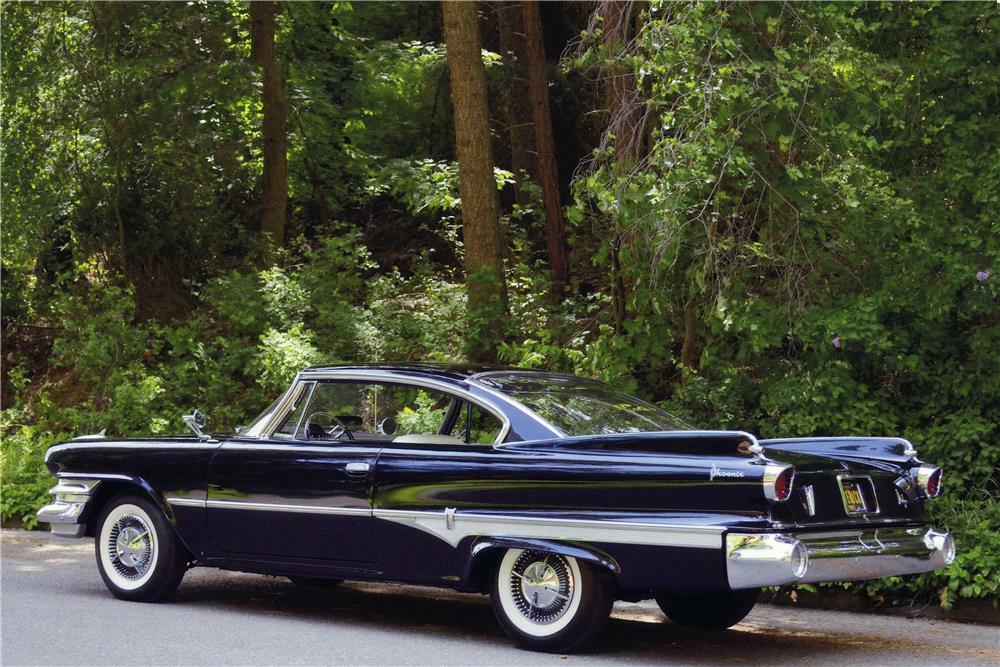
Now, you may be like, "I thought Dodge Dart's where small cars...what is this?" Well, you wouldn't be wrong, exactly, as for many years a Dodge Dart did denote a small car, including most recently from 2012-2016. From 1960 through 1962, however, Dodge Dart meant big. "Dart" first appeared in the Dodge lineup in 1960 on Dodge's least expensive standard-size line below the also freshly chirtened for 1960 Polara and Matador lines. For whatever reason the slightly smaller Plymouth body-shell was used on a whole sub-series of Darts including, from top of the heap to "price leader", the Dart Phoenix, Pioneer and Seneca. Above is a 1960 Dart Pioneer festooned in all it's over-decorated, 1950's-esque finned and chromed glory. In case you're wondering, these cars were sales duds. 

What makes our '62 Dart here really special is it's part of Chrysler's infamous 1962 downsizing of Dodge and Plymouth "standard-size" models. Wait, downsizing in the 1960's? Wasn't that a late 1970's thing? Well, the answer to that question is the stuff of legend. 


The story goes that at an industry social function some time in 1960, let's imagine it was like a scene out of "Mad Men" with everyone dolled up, smoking, flirting inappropriately and getting plastered, William Newburg, freshly minted president of Chrysler, overheard Chevrolet executives discussing their new downsized lineup for 1962. Lest be made to look bad by Chevrolet, being "Mr. Proactive", Newburg promptly ordered the already finalized for production 1962 Plymouth and Dodge standard-sized models be scrapped for new and smaller ones. Chrysler division and Imperial models where spared his wrath. 


Again, like a scene straight out of "Mad Men", the problem was Newburg's intel was either wrong or he misinterpreted what he overheard in between noshes on chipotle crab corn dip. Not only was Chevrolet not downsizing, they were introducing an entirely new line of compact cars for 1962 to be known as the Chevy II. And...what resulted from a much-hurried hard-reboot at Dodge and Plymouth left a lot to be desired design wise. Although, frankly, you can blame nostalgia, perhaps, for some of my affection for these bug-eyed beauties but...I still find them oddly handsome and sized just right. 


With sales tanking, Dodge hastily rebadged the still ginormous Chrysler Newport (nee DeSoto) as the Dodge "880" in mid model-year 1962, technically making our Dart here a mid-size car. Year-to-year sales cratered by as much as twenty-five percent for Dodge (and Plymouth) and remarkably, Newburg didn't get his knee-jerk arse fired over it. No, sir. What did him in shortly after the introduction of these cars was an embezzlement scheme involving parts vendors that almost killed off the whole company. Nice. Chevrolet sales went up for 1962 almost as much as Dodge and Plymouth sales went down meanwhile the erroneous and clandestine info gleamed after two or three straight-up Manhattan's wreaked havoc on The Chrysler Corporation for the better part of the next twenty-years. Care for another baked pear, Mr. Newburg? 


The reaction to these cars was so bad that an immediate and near comprehensive do-over was ordered for 1963. Viewed as wildly successful based on the meteroic sales increase for 1963 vs. 1962, the reskin took a lot of the "what-is-that?" out of these designs but also, subjectively, whittled away most if not all of the distinctiveness of these cars that impish me loved; I still do. Again, my fondness for these might be somewhat skewed by my childhood facination with them but I don't see what folks see or didn't see in them. Crazy how fond we are of stuff from our childhood. Probably didn't matter what the car was that was across the street with its hood up, whatever it was would be golden through my eyes then as now.  


Dodge cleaned up their Dart model naming scheme for '62 as well replacing the silly Phoenix-Pioneer-Seneca non-sense with "Dart 440", "Dart 330" and just plain old "Dart". 330 and 440 having nothing to do with engine size which is somewhat ironic seeing that Chrysler introduced a 440 cubic-inch V-8 in 1966. 


Another silver lining was that Chrysler engineers used an enlarged version of their new for 1960 and quite capable "A-body" chassis that underpinned the compact Lancer and the "Valiant by Chrysler". This chassis went onto be called the "B-body" and went onto a fairly stellar and long career underpinning many a Dodge and Plymouth, some choice Chrysler branded models too, in the years to come. The Imperial division, which had been around since 1955, was dropped after 1975.  


You're not alone thinking our '62 here looks like a puffed up Lancer because, essentially, that's what it is. Although, it's funny; whereas the little Lancer, that would be the white car, I think homely as sin, the larger Dart I find to be a much better looking car. Even in red. Wouldn't be the only time a design looked better on a bigger canvas. Inverse is true at times but rarely. 

The Dart nameplate was moved down to what they had been calling the Lancer for 1963 and there it remained, on smaller cars, through the end of the A-body's rather lengthy run through 1976 when it was replaced by the "F-body", F is not for fun, incidentally, Dodge Aspen. What had been the 1962 Dart series was rebranded as "Polara 500", "440", with no Polara pre-fix, as well as a "330". . 


That family across the street didn't have that Dart for long. The father and his sons were mechanics and many cars that popped up in their driveway were beaters they'd repair and sell.  I don't recall what came next in the never ending driveway turntable of cars they had but that Dart has sure stuck with me.