Showing posts with label Pontiac Grand Prix. Show all posts

Tuesday, January 2, 2024

1979 Pontiac Grand Prix SSJ - Bad Then, Worse Now


I've always thought the proportions of GM's downsized 1978-1988 intermediate coupes wonky, they look smaller than they actually are and their styling derivative. Throw a toilet seat on the trunk lid, and this 1979 Pontiac Grand Prix does the seemingly impossible; it makes a bad thing worse. 


Somewhat mercifully, what's officially a "simulated deck mount" was not part of the "SSJ" trim package that was exclusive to model year 1979 Grand Prix'. From the factory, those that checked the SSJ box on the order form for '79 got a Grand Prix SJ with a special gold "Targa-band" highlighting a heavily padded, "elk grain", vinyl landau roof, factory custom pin stripping and cast emblems. The fake wire wheel covers were an extra cost option. 


SSJ's for '79 came in any color Grand Prix' came in that year. The "simulated deck mount" spare tire was an after market add-on, most likely by a dealership who charged exorbitantly for it. You either "get this" look or wonder what in the heck the buyer and seller were thinking. 


From 1969 through 1984, Pontiac took liberties with Duesenberg's nomenclature to differentiate different trim levels of their Grand Prix. Most "Doozies" made between 1927 and 1936 were model J's; supercharged J's were "SJ". Two modified SJ models called "SSJ" were custom built for actors Gary Cooper and Clark Gable. There was never a Grand Prix "S" although there was an "LJ" model, hence liberties taken, that was introduced in 1975. The "L" denoted luxury whereas the "S" in SJ was purportedly for "sport". 


In model years 1971 and 1972, a Grand Prix SSJ had this unique paint scheme, special wheels, emblems, and a god's-green-earth Hurst (automatic transmission) shifter. Gold jumpsuits were available after market and at additional cost. See dealer for details. 


Taste being like arm pits, no doubt someone thought this accessory added to the car's, ahem, elan. Meant to emulate the elaborate outboard spare tire cases of cars of the Great Gatsby era, which, here's a real kick to the old noggin', were about as long ago at the time as this Grand Prix is old now. 


Chrysler tried something similar on their 1957 Imperial Southampton and their 1960 and 1961 Valliant's (above is a 1960) with similarly comical results; through my foggy goggles it's like putting a chandelier in a mobile home. Ford was far more successful with their vestigial trunk hump\bump on their 1956 and 1957 Continental and 1968-1999 Lincoln Continental Mark's. 


From this angle, our Knoxville, Tennessee based Facebook Marketplace find here is atypical 1978-1980 Pontiac Grand Prix; I'm indifferent at best towards it. GM smoothed out the quirks of these cars for 1981 but the dye had been cast, the personal luxury car segment, one that the Grand Prix helped spur to great heights in the 1970's had begun it's long, slow decent to oblivion.  


The passage of some (he swallows hard) 45-years now has done little to usage this car's cringe-worthiness. While some things like disco music and a handful of movies and TV shows have aged well, particularly disco which in and of itself is ironic seeing the vitriol for it at the time, fussy, wholly unnecessary, Liberace-esque bolt ons, whether installed at the factory or dealership, were bad looking then and are even worse now.  

Monday, July 18, 2022

1980 Pontiac Grand Am - Imitation is the Sincerest Form of Flattery


I'm sure General Motors didn't mean to make a mockery of their lovely 1973-1975 Grand Am but these 1978-1980 models came up as either half-baked if not half half-hearted attempts to emulate one of my favorite cars of all time. They say imitation is the sincerest form of flattery, right? Our subject here is a 1980. 


Although contemporary reviews lambasted its overt, excessive styling and middling performance, puckish, impish, eight-year-old me was struck by lightning when I first saw one at the New York Auto Show in the long since demolished New York Coliseum in the fall of 1972. First impressions can indeed be lasting. Even time spent with several in the early to mid-eighties couldn't dissuade me.  


Based on this overwritten 1978 magazine ad copy, clearly someone at Pontiac (or their ad agency) had intentions of connecting the old Grand Am with the, ahem, new one.  Even if there were few buyers for the originals. Feisty 301 cubic-inch 2bbl\V-8. Truth in advertising? Please. 


Same crew that drew up the original Grand Am probably had a hand in another 1970's Pontiac oddity, the spectacular, one year only, 1977 Can Am. Did Pontiac show that crew the door when it came time to bake up the 1978 Grand Am? Oh, and why this mashup of a Trans Am and Grand LeMans (of all things) works so well, much like love, defies logic or reason. 


In fairness, the problem with the 1978-1980 Grand Am wasn't the car itself but what it based on. That being the new for 1978, freshly downsized, Pontiac Grand LeMans. Itself part of a gaggle of impossibly mediocre looking makes and models that included the slanty-back, hatchback Oldsmobile Cutlass\Buick Century and of course the belle of the ugly duckling ball, the Chevrolet Monte Carlo


When we understand that the Grand Am was a trim level of the Luxury\Grand LeMans, we can also appreciate the Grand Am, well, at least the original ones, as a separate model from Pontiac's less sporty, more luxurious two-door, the Grand Prix. Why have two if not three cars all targeting the same buyer? Sign of the times. And what a time it was to be a coupe lover.  


I might be splitting hairs or attempting to distinguish varying shades of grey, but Pontiac sufficiently disguised the 1973 Grand Prix from the Luxury LeMans\Grand Am to make one at least think they were succinctly different models. At least through my foggy goggles. And Pontiac never made the Grand Prix out to be a performance model like they portended to make the Gran Am. The Cam Am too. Did I say it was a great time to be a coupe lover? 


Since I have no use for any downsized GM intermediate, any pretense of the Grand Prix and Grand Am being different went out the rear window (that wouldn't roll down). Best I can say about this vintage of Grand Prix is that at least it's not a Chevrolet Monte Carlo. Nice "snowflake" rims too. Swap the front facia and lose the hood ornament and what do you have? A Grand LeMans. The prior Grand Am and Grand Prix had enough separate body stampings to, again, construe they were different cars. Which, in reality, they really weren't. 


Personal luxury car buyers turned out to be a fickle bunch. Despite strong sales at first, GM's new-for-'78 models helped grease the skids for the demise of a once healthy market segment. One that seems all but impossible to fathom in this day of do-everything-well crossovers. Just like the original Grand Am's, the downsized 1978-1980 models didn't sell well; big sporty cars have never sold well and the "imitation" Grand Am's questionable looks, from certain angles, didn't help. Pontiac pulled the plug on the model line for good, well, technically, after 1980. Apparently, whomever at car company's names cars had plum run out of ideas since starting in 1985 they festooned "GRAND AM" to a new front-wheel-drive compact no one in their right mind could construe as an imitation of anything. 

Friday, May 6, 2022

2002 Pontiac Grand Prix - Bargain Hunters Can't Be Choosey


No sooner had "The Dale" hit 250,000 miles that I stumbled across this 2002 Pontiac Grand Prix for sale out near Toledo. With just 45,000 on it and an asking price of $5,999, this looked to be the kind of bargain Dave Ramsey fans dream about. 


The scratchy voiced, very young sounding sales boy on the phone said it was recently traded in by a "little old lady". A twenty-year-old Pontiac with just 45,000 on it traded in by a little old lady in Toledo, Ohio? Sounds like lyrics from a country song. 


This vintage of the once venerable Pontiac Grand Prix debuted for model year 1997 and was built through 2003. Built on an updated W-body, originally called the "GM10" chassis that went back to 1988, this iteration of the GP was the last to be offered both as a four-door and two-door. 


Pontiac built something they called "Grand Prix" from 1962-2008. At first a full-size, "sporty car", a market niche that never really took off, Grand Prix became a mainstay come 1969 when Pontiac introduced an intermediate sized coupe that spurred growth of the wildly popular personal luxury car niche of the 1970's. 


Oddly enough, coupe lover that I am, I prefer the styling of the four-door to the two-door models on these "second-generation" Grand Prix W-bodies. It's as if they forgot to design a coupe when they drew up the four-door model and this is the best they could do. Unlike what Chevrolet did with the Impala and Monte Carlo come model year 2000 when they built those cars off the updated W-body chassis. 


1997-2003 Pontiac Grand Prix coupes were all "GT's" so that means this one has GM's 3800 Series II V-6 engine, 3.29:1 final drive ratio, FE3 suspension (or whatever Pontiac referred to it as) and quicker responding steering box than that found on base, four-door models that were known as "SE's" This car is essentially my Monte Carlo SS with a Pontiac body and interior. 


Even when these were new the styling, to me at least, was worn out. Which is interesting considering how out-of-the-box the original GM10 Grand Prix was back in its day. GM got lambasted by critics for only offering those cars, the similar Oldsmobile Cutlass and Buick Regal too, only as coupes. Well, I most certainly didn't mind but buyers with families apparently did. Four door versions finally came out in 1990 and they were as awkward looking as what a Pontiac Aztec would be.  


Ironic, then, that when Pontiac redesigned the Grand Prix for 1997, the coupes looked as unfinished and ill-proportioned as the four-door models did in 1990. That's just my two cents that's not worth even that. Your opinion may vary as your mileage will. See dealer for details.  


Looks aside and bargain hunter I am, I could do worse than this thing. I like their smooth, compliant ride, competent handling, excellent brakes, adequate power, spacious, comfortable interior and decent, although not great compared to a Honda Accord, build quality. My Monte Carlo is living proof of just how much you can get out of one of these things. I'd be giving up heated leather front buckets, a sunroof and a certain amount of swagger but bargain hunters can't be choosers. Well, they can to some extent but hopefully you get my gist. 


Having gone through the ringer time and time again with my Monte Carlo, I know where all the bodies are buried as well in terms of what can and will go wrong. I would have to stomach this chintzy, fussy interior, though. Suddenly it's 1989 all over again and not in a good way. 


I was actually surprised this was still available when I called on it. This rust on the driver's side rocker panel allegedly the only cosmetic issue. Well, that and the bland styling and the Bush I and Clinton era, rental grade insides. I made an appointment to make the one-hundred seventy-mile round trip out to the dealership to test drive it. And why is it all the "good buys" are always that far way? 


I was making Cinco de Mayo dinner for my family when a text from the dealership popped up on my phone. The kid I was talking to wasn't aware that a couple had put a deposit on it earlier that day. Probably just as well as I wasn't exactly doing jumping jacks over this thing, and I wasn't thrilled about a drive out to holy Toledo. That said, I must tell you, it's getting harder and harder to find a good deal on a used car these days. 


Monday, February 15, 2021

Vince Lombardi's Pontiac's - More Than Just X's and O's


When I was a kid and came of football appreciating age in the mid '70's, I was transfixed by the Green Bay Packers of the 1960's and their coach Vince Lombardi. I'm not a Packers fan, mind you; just an admirer of that team and their coach. NFL Film's series, "A Football Life", documents the lives of select NFL players, teams, owners and coaches and the expansive, ninety-minute episode they did several years ago on Lombardi is one of their finest. Recently, I watched it again for the first time and found myself more perplexed than ever by the enigmatic man; again, a man I unquestionably worshiped when I was growing up. The film, and this is a testament to how well it's done, much like the man  doesn't leave much room for indifference.  


Of course, this is a blog (primarily) about cars, and what inspired today's soliloquy were the two scenes in the documentary that featured Lombardi either driving or walking around Pontiac's. It surprised me too much in the same way I used to be occaisionally intrigued by what my school teachers drove. This scene in "A Football Life", originally, from a highlight film shot by NFL Films just before the historic 1967 NFL championship game between Lombardi's Packers and the Dallas Cowboys shows Lombardi behind the wheel of a brand-new 1968 Bonneville. 


In this shot from another documentary on the game we see that Bonneville he's driving is a four-door model but not, from best I can tell, a top-of-the-line Brougham.  

The tell-all it's a '68 is the chrome trim around the front end. 1965 models had stacked headlights, '66's had body-colored trim where the '68's have chrome. Also, obviously, seeing this footage was shot on December 31, 1967, it couldn't have been any newer than a 1968 model. 


Seeing what a conservative man he was in outward physicality, dress, offensive play calling and his devotion to God, a Pontiac seems somewhat overt for him. Not quite sure what I'd expected him to be driving; there are other films about those great 1960's Packers teams and I swear they show Lombardi driving a 1963 Chrysler New Yorker that I find more fitting of him what with its more stantoiran, autoritarian aire. Then again, one of many remarkable things about Lombardi was that he could also be  equally progressive and in many more ways than one. Famously color-blind with regards to race and a "Kennedy Democrat", the Bonneville perhaps were his way of showing the world there was more to him than just X's and O's. 


If I was surprised by the Bonneville, imagine my delight later in the film seeing him next to this all-new for 1969 Pontiac Grand Prix. Based on the wheel-covers and vinyl top this is probably an "LJ" model as opposed to the somewhat sportier "SJ". Was Lombardi actually a passingly casual automobile enthusiast who, much like his ability to evaluate raw football-talent, knew of a trend-setting automobile when he saw one? After all, the 1969 Pontiac Grand Prix helped spur a market segment that would go onto to define much of 1970's domestic automobilia. 


We are what we drive, right? So, who was Vince Lombardi based on the cars he porportedly drove? For the purpose of today's blog I'll look past any chance of his vehicle choices being happenstanial; after all, we are talking about Vince Lombardi who left nothing to chance. That aside, like most things, who he was and what fifty-plus years after his death of legend making have made him out to be now, the answer to that question lies somewhere in the middle. 

Thursday, September 24, 2020

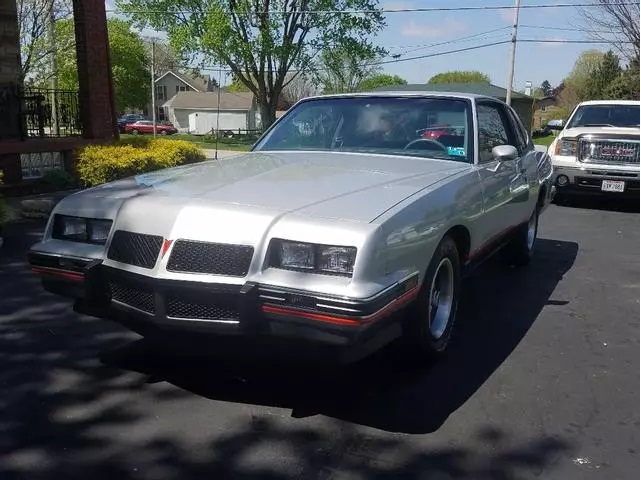
1986 Pontiac Grand Prix 2+2 - Distinctly Different Bubba


I really liked Pontiac's 1981 update of their 1978 downsized Grand Prix. Although, honestly, they still lacked that "gotta-have-it" swagger of the "classic" GP's of 1969-1972 and even to some extent the 1973-1977 "colonnades". I blame that on these cars being just too darn small for a design that was "that big". Like we've discussed before, some designs look better on larger canvases. Of course, the inverse is true as well. They where hardly the worst looking things on the road at the time  and certainly had more of the "spirit" of the older GP's than than the 1978-1980 did. 


Unlike Chevrolet, though, Pontiac never offered a Grand Prix of this vintage with anything remotely construed as a performance engine or even a handling package. Even when it appeared that would have as in the case of these odd looking 1986 only, Grand Prix 2+2's. Allegedly, just 1,225 were built so Pontiac could be in compliance with NASCAR's even at the time archaic rule that whatever raced on their tracks had to be available for sale to the public. Even in such limited quantities. Chevrolet offered a similar looking Monte Carlo SS they called "Aero-coupe" for 1986 and 1987. Incidentally, the 2+2 moniker hearkened back to the a trim package Pontiac offered on their Catalina from 1964-1967. 

Outwardly, the biggest difference between the Monte Carlo SS "Aero-coupe" and a Grand Prix 2+2 was that while the Monte Carlo SS kept the same front end other Monte Carlo SS' models had, Pontiac drew up this (eek!) "shovel nose" front end. As we say, though, "there's an ass for every seat". Folks gobbled everyone of these up quick as they could. No doubt most were NASCAR fans although I'm sure a few were sold to folks who had no idea what the design inspiration for them was. 

Inside buyers got power windows and door locks, still considered higher-end items in the mid 1980's, and buckets and a console enclosed floor shifter which were the epitome of "sporty" back then. There's also that steering wheel that looks like it was pulled from a Fiero. And, oh, that plastic wood grain dash. May have worked on "lesser" GP's but on one with sporting pretensions like this thing, it's as bad as the nose job this car has. 

Although I love the paint scheme, stripes and those "Rally II" rims, as a GM die-hard. then as I inexplicably remain today, I could almost look past the funky (not in a good way) front end and rear window had their been some serious power under the hood. All of these came with nothing more potent than Chevrolet's one-hundred sixty five horsepower 305 V-8 engine. That's too bad. Can you imagine one of these hopped up with the mighty Buick turbo V-6 from this era? All sins forgiven! 

While we're talking engines, it always struck me as odd that GM never offered the fabulous "Tuned-Port-Injection" or TPI 305 engines they offered on Z28's and Trans Am's on these cars. If there was no 305 offered I wont' even mentioned the 350 version of it. Even on the Monte Carlo SS which never had any more than one-hundred an eighty horsepower from the factory. As if someone would buy a Monte Carlo or Grand Prix that could really move over a Camaro Z28 or Trans Am. I mean, some would. Yes. But by and large they were to two distinctly different Bubba's. And seeing that the owner of this car wants almost twenty-grand for it, spending that much on this and then doing a proper motor swap makes no sense what-so-ever.