Tuesday, December 28, 2021

2002 Dale Earnhardt Chevrolet Monte Carlo at 240K - Better The Devil You Know

The dashboard on my 2002 Dale Earnhardt Chevrolet Monte Carlo glowed like a Christmas Tree last Wednesday when along with the omni-present CHECK ENGINE LIGHT, the "ABS" and "SERVICE TRACTION NOW" dingers came on. Merry Christmas to you too, Dale.

To make matters worse, my gas gauge was stuck on full despite more than two-hundred fifty-miles driven since last I filled up. It's since "fixed" itself but we know these things only get worse. Along with my soggy rear struts, creeping rust issues and staring down the barrel of two-hundred and forty-thousand miles on the digital ticker, it got me thinking about how long I can keep this twenty-year old good old boy rolling. 

Like someone who won't change their fashion sense or hairstyle, I did a quick search on Facebook Marketplace for, you guessed it, Chevrolet Monte Carlo's. I found several in varying degrees of distress within 500 miles of my home on Cleveland, Ohio's west side but this one outside Dayton was the most compelling. General Motors hasn't built my vintage of Monte Carlo since 2005 and none since 2007 so ones in decent shape or are fixable at least are getting harder and harder to find. Us beggars or those looking for a solid bargain can't be too choosy. 

It was far from perfect but with just  under  one-hundred and twenty-eight thousand miles on it I could do worse. Especially for $3,100. The seller said the only major issue it had was that it needed an oil pan gasket. No big deal given that I'd done the one of my car myself at the start of The Pandemic thus side-stepping an absurd repair tab; it was at least $800. It's not a complicated job but because the passenger side engine mount is in the way of getting the pan out, it's a fairly labor-intensive one. Messy too. 


I don't mind so much that it wasn't a "Dale" but I chaffed somewhat at no sunroof, no heated seats, the lack of a cassette deck and no power passenger seat. I could swap everything over from my car, save for the sunroof of course. Still, it was an SS with the F41 suspension and 3800 Series II V-6; despite the oil pan issues, I believe it to be one of the best engines GM has ever built. Right up there the lordly Chevrolet small-block.

The very responsive owner of the car and I messaged back and forth several times late last week and we left it that I'd be in contact with them after Christmas. If it wasn't so far away I probably would have made the trip but a four-hour if not four and half hour drive to kick the tires of a car I was luke warm about from the start didn't seem to me to be the best way to spend my time. 

My wife also had a pearls of wisdom. Yes, my "Dale" has a significant amount of mileage on it but I've put all but fourteen-thousand of the near two-hundred forty-thousand miles on it over the last eleven going on twelve years. Who knows how the one-hundred twenty-eight thousand miles or so were put on this car. On older cars, seriously, it's not so much how many miles are on them, it's more like, "how were the miles put on?"

"Better the devil you know", she said. And I couldn't agree more. I'll swap the wheel bearings if and when the ABS system becomes a recurring issue on the Dale. Same with the gas gauge relay. Rear struts too. 

Better the devil or Intimidator you know. 


Monday, December 27, 2021

1982 Toyota Celica Supra - Sideways


You may have heard of Toyota Supra's since Toyota's been selling (a bizarre looking) one built in partnership with BMW since 2019. However, seeing Toyota hasn't made a Celica since 2006, stumbling across a Celica Supra is even more of a what-is-that? I can't tell you the last time I saw one of these in the wild. This is a 1982 Toyota Celica Supra I found in the parking garage of the increasingly snooty and lock-jawed open-air mall near our home here on Cleveland, Ohio's westside. I wish I had taken more pictures of it. 

Yes, Celica Supra. From 1978 through 1986, the Supra was to the Celica, technically Toyota's "pony-car", what the Z28 and Trans Am were to the Chevrolet Camaro and Pontiac Firebird. Well, that's a bit of a stretch seeing how different a Celica Supra was from a garden-variety Celica but I hope you get the point. A Z28 and Trans Am were "all" Camaro and Firebird whereas Toyota grafted on as much as eight-inches onto the front of a Celica so they could put their six-cylinder engine in. There were other changes as well but the bigger schnozz was the largest and most obvious alteration. 

Hard to fathom it took Toyota almost an entire decade to come up with an answer to Datsun's seminal if not world-changing Z-car. But it did. Datsun, now known as Nissan, introduced the 240Z in 1969, Toyota didn't roll out the first Celica Supra until 1978 and they started importing them to the U.S. in 1979. Although it was more of a luxury grand-tourer than sports car, taste-makers and fashionistas couldn't get enough of them despite their huge front ends (that somehow looked good) no to mention their lordly $10,000+ sticker prices. The Datsun Z-car's performance by the end of the '70's had been softened as well and luxury accouterments and gizmos turned it into sort of a Japanese Chevrolet Monte Carlo. But two-magnificently crafted, sporty Japanese cars to choose from? Yes, please. 


Toyota got serious about making the Supra a real sports car, or more of a one, come 1982. Aggressive styling, a larger, now double-overhead-cam inline-six cylinder engine, independent rear suspension, four-wheel disc brakes, magnificent seats and a five-speed manual in an age of four-speeds made for an out-of-this-world, "affordable" grand-touring car that was more bargain basement Porsche than Camaro or Firebird.  

It was so good it was named Motor Trend's Import Car of the Year for 1982 and made Car and Driver's Best10 list. Heady stuff. 

If there was any issue it was they were expensive; a performance-spec Supra for '82 went out the door for nearly $16,000 when tax and other ancillary charges were tacked on. You could get a loaded Camaro Z28, which was all new for '82 as well, for around $11,000 out the door. But you got what you paid for. 


Frankly, our '82 Supra here was vastly superior to the half-baked '82 Camaro Z28 and Trans Am; a last year for the third-generation or "C3" 1982 Corvette that stickered for around $23,000 at the time as well. So, to the enlightened, well-heeled buyer, the Supra was a terrific if not brilliant buy. It was a much better daily driver than a fourth-generation or C4 Corvette too. 

Toyota ended production for these second-generation Supra's, officially, for 1985, but a surplus of models and a delay in production of the third generation of "Supra's" meant there were two Supra's for 1986. The "old" Supra, still marketed as the Celica Supra and a new model known simply as Supra that shared little if anything with an also new-for-1986, front wheel drive Celica. If that sounds confusing, you're right. Then again, Toyota did so much right back in the 1980's that they could get away with making a marketing faux pas or two. 


Owners of Jaguars, Aston Martin's and BMW's have a nasty habit of parking their toys diagonally taking up two or more spaces at a time in this garage and it irritates me. Especially this time of the year. However, if any car in this garage deserves to be parked sideways at any time without getting a stink eye from yours truly it's this old beauty. 


Thursday, December 23, 2021

1972 Chevrolet Chevelle - Imagine


Only in hindsight do we realize the futility of a situation. I probably had a better shot at dating a member of my high school cheerleader squad than I had with a 1972 Chevelle I found for sale one fall day back in 1982 on my way home from Nassau Community College. This one's quite similar to it except for the aftermarket rims (I don't care for), a chromed-out engine and who knows what else it wasn't born with. 

She sat at that corner of the parking lot at what is now a real estate office at the intersection of Long Beach Road and Seaman Avenue in Rockville Centre back on Long Island with "FOR SALE 1200" painted on her windshield. I was fish hooked and had to have a closer look. Forty-years ago, $1,200 was not an insignificant amount of money but for a car even back then that had the rock star allure of Mick Jagger, it was the deal of a lifetime. Can you even imagine finding a rust-free, all-original '72 Chevelle these days for what amounts to $1,200 today? That would be approximately, give or take, $3,500. Non-running junkers are going for north of ten-grand. Way north. 

I turned my squeaky, rusty Comet right around and was amazed, stunned actually, when the guy behind the counter didn't flinch when I asked for the keys. He either didn't care or he bought into the notion that someone with the map of Ireland on his face and the outward disposition of an altar boy meant that no bad could happen. Seeing how hard I got on the thing something bad certainly could have happened, but nothing did. Unless you count my not ending up with the car as a bad thing as I most certainly do.


The problem was that at even less than fifty-bucks a credit at NCC back then, working up to three minimum wage jobs meant I had little money for anything let alone another car. About the only capital I had was wrapped up in my wretched, 1974 Mercury Comet. To get cash I'd have to sell the Comet. Then how would I get to school? 

The only option was to ask my mother for a loan. I still see the smoke from her Raleigh cigarette, plain, no filter, puffing out of her nose and mouth in a syncopated rhythm as she slam-dunked me; "You already have a car. Why do you need another one?"

On the face of it I couldn't argue with her less than sanguine logic. She wasn't a car person although I know she was aware of my displeasure with the Comet. Didn't matter.  "No" meant "no" no matter how much I pleaded my case that I would sell the Comet, give her the money I got for it and pay the balance back in installments. No. The Comet wasn't worth anywhere near the lordly amount of $1,200. 

Perhaps it's just as well I didn't get that Chevelle; I'd probably just have driven it into the ground like I do all of my "drivers". It's sweet to think about how much I would have loved that car to say nothing of how much it would have improved my "cool" quotient. Although it was just a base model, "307" car. That warm, pride of ownership feeling coming with the purchase of my beloved 1975 Chrysler Cordoba the following summer; just goes to show you how desperate I was. However, that Cordoba was more symbolic than actually a good car as it introduced me to a world I wasn't aware could exist before it. A world were anything was possible if you worked hard enough. I don't wax nostalgically if poetically for my long lost Cordoba per se, I remember fondly the feelings I had before it when nothing seemed possible. Imagine if I had a Chevelle. 


Monday, December 20, 2021

1985 Dodge Daytona - Roadkill

Please don't ask, but feel free to wonder, why this Dodge Daytona, that based on the five-lug "snow-flake rims" and lack of a CHMSL I believe is a 1985, is sitting semi-enclosed on the property where I currently work. I could find out but that would involve talking with the owner; if I struck up that conversation, I know I'd get a rambling, wholly uninteresting earful. However, that's not to say this isn't an interesting car. And interesting in ways that went completely unappreciated by yours truly back-in-the-day when it was shiny and new. Or at least at some shine to it.

How we forget. The notion of a high-performance, front-wheel-drive anything let alone something styled in the vein of a sporty-car was unheard of in the mid-1980's. Hence, the Dodge Daytona TurboZ, with 142-horsepower on tap from a 2.2-liter, port-fuel injection, inline-four-cylinder engine with a turbocharger ramming 7-psi of boost down its tiny throttle body was known as the world's first front-wheel-drive "muscle car". I laughed at anything "turbo" back then but zipping from zero-to-sixty in 8-seconds or so was nothing to sneeze. GM and Ford weren't doing much better with their big, V-8 powered Camaro and Mustang. Corvette too while I'm at it. That quickly changed but for a minute or two, the Daytona TurboZ was gagging GM and Ford with a spoon.  

Granted, a lot of the performance spec-worthy power-to-weight ratio was due to the car weighing at most, 2,500 pounds, but that's like not giving a motorcycle snaps for being fast because it's so light. The lack of badging on this thign here leads me to believe it's the less powerful, non-turbo base model Daytona but who knows for sure. All I do know is it's been branded as, "Roadkill". Well, if the brake-shoe fits.  

At the time I was oblivious to these cars; they were a punch line to a cliched, late-night joke. He-man over here believed all muscle cars should be rear-wheel-drive and powered by large, heavy and carburated V-8 engines. With dual exhausts too. With numb-handling and molar cracking rides. Meanwhile, over at Lee Iacocca's house, these things could keep up with anything "muscle" from GM and got twenty-five miles-per-gallon (or so). They had front-wheel-drive so you could drive them all year round if you lived in a snow-city too. Sigh. I wince at all the fun I could have had. The hell was the matter with me. 

Well, before I completely eviscerate myself, I have to remind myself that these are still K-cars at the end of the day. Yeah, yeah. They labeled them "G-body", but they weren't kidding nobody. Take off the comely sheet metal, cladding and enclosed headlights and you got a Reliant K here. Who's up for a viewing of "Planes, Trains and Automobiles"? 

Right, wrong, or indifferent, the aura if not ethos of the K-car meant it was cheap and "krappy". As if any Camaro or Mustang was really that much different or better.  


Sunday, December 19, 2021

1994 Pontiac Trans Sport - Wanderlust


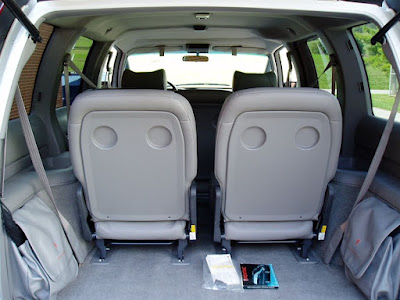
I found this old "Dustbuster" on Facebook Marketplace recently with an asking price of $14,500. That's a lot of money for a vehicle that got its nickname from the seminal, wall-mounted Black and Decker appliance to say nothing of its shoddy build quality, wonky ergonomics, being grossly underpowered (especially at first) and having abysmal NHTSA crash-test ratings. Chevrolet and Oldsmobile had similar looking vans of their own, but the Pontiac Trans Sport was always my favorite; although I liked the longer shnozzed 1990-1993's better than these 1994-1996 models with their truncated front ends. This got me thinking, what with but a smattering of minivans only available today, what happened to a vehicle segment that was once so dominant? 


Is the minivan as we once knew it actually dead (or dying) or has it just evolved into today's amorphous, wholly less practical four-wheeled-blobs known as crossovers? There's but a smattering of minivans left on the market these days, neighbors with a gaggle of young boys just bought a Chrysler Pacifica and they love it, but really, save for the lack of sliding doors on either side, is there much of a difference between a Chevrolet Traverse and the neighbor's new Pacifica? While we're at it, is there much of a difference between a Traverse and our inexplicably free of spilled juice-box stains Trans Sport here? 


All but from the get-go, minivans were tagged with the dreaded "mom-mobile" adage that also dogged station wagons, the vehicle segment that minivans did in. Just like station wagons, though, that adage didn't stop families from buying them. However, minivans evoked deep-seated wanderlust. A feeling youth had past buyers by, and life was no longer an adventure but a series of chores, tasks and responsibilities.  Smile for that family Christmas card everybody even though you're miserable and bored to death inside. Therefore, you can't blame Pontiac for at least trying to put a little zing in the Monday night meatloaf recipe.


The notion at first was, having been there and done that, absurd, especially considering all the other issues the Trans Sport had. However, it didn't take a rocket scientist, automobile engineer, marketing wonk or product planner to realize that merging the decidedly non "mom-mobile" ethos of trucks with the practicality of mini-vans with some degree of sporting elan might be a marketable vehicle. Problem was, in the mid-1990's, making such a vehicle was all but. abstract. 


That same notion in the 1990's gave rise to the popularity of SUV's as non-mom-mobiles. Especially as The Big figured out how to smooth out enough of their truck's quirks to make them suitable for family-duty. Also, there was something alluring about a vehicle segment whose acronym started with the word, "sport". Granted, there wasn't much of anything "sporty" about an SUV, but they seemed imminently "sportier" than a minivan. Even one with the word "sport" in it like our Trans Sport here. 


Still, it took General Motors forever to figure out the whole CUV thing. While their truck-based SUV's kept getting better and better and they did make marked improvements to their "U-body" vans starting in 1997 (sliding doors on both sides!), they really didn't sort out the cross-over thing until the debut of GMC Acadia in 2007 and Chevrolet Traverse and Buick Enclave in 2008. All of which were, c'mon now, nothing more than a minivan with no sliders. Saturn even got one they called, "Outlook". Pop-quiz, did Saturn ever get a minivan?  Ding-ding-ding! Yes, they did, Sparky. Something they called "Relay" from 2005-2007. 


Subsequently, the last U-body GM minivan rolled out of production in 2009. Ford, incidentally, who came with their world beating Mazda-developed "Escape" in 2001, threw in their minivan towel in 2007. Chrysler, seeing a hole in the market, has continued to push minivans out. God bless 'em too. You have to see the rolling man-cave on wheels that is the neighbor's Chrysler Pacifica. I wouldn't be caught dead with it in my driveway, but I wouldn't mind watching the Godfather trilogy on its massive rear infotainment screen on a road trip from Cleveland to D.C. Are we there yet? 


As far as the trend-setting Pontiac Trans Sport goes, when GM rebooted the U-bodies for 1997, they introduced an even more cladded up, outdoorsy thing they dubbed Trans Sport "Montana" that emulated SUV's. Well, to a point. Apparently, it was so popular that Pontiac rebranded all Pontiac minivans "Montana" starting in 1998. Mini-vans styled as pseudo sports-cars may have failed but as rugged "Jeep meets an SUV" type of thing? Bring it on. 


Trying to take the minivan combined with an SUV ethos one step further, in 2000, Pontiac introduced the legendary Aztec which, thank you "Breaking Bad", has aged somewhat better than anyone would have imagined. A good idea on paper, actually a great one when you think about it, its design was so unusual, though, it was dubbed, "The Angry Dumpster". Again, it took GM several years and tries to figure the whole "CUV" thing out. Buick even got a version of the minivan-based Pontiac Angry Dumpster they called the "Rendezvous".  These days, Buick doesn't even sell what was once considered a "car" as their entire lineup subsists of crossovers. 


The future. How did we get here from the 1990's? You can start with the ant-mom-mobile Pontiac Trans Sport. Oh, and, whatever you do, if you have a crossover, please never refer to it as a truck. If you do that, we can't be friends. 


Saturday, December 11, 2021

New Struts for the 2002 Dale Earnhardt Chevrolet Monte Carlo - The Struggle Is Real


Every time I finish a job like swapping out the front struts on my 2002 Dale Earnhardt Chevrolet Monte Carlo SS, I begrudgingly thank my late mother for her steadfast determination to block my aspirations to pursue a career in automotive repair. I also feel sorry for people who wake up every day and go to work where their employ consists of grueling and fairly dangerous tasks. I at least have the benefit of knowing this project is probably a one-off; for folks who do this kind of work for a living, or any job that is physically taxing, it's onto the next job. More power to all of you. Seriously. 

It all started easy enough. I found 1AAuto's video on strut replacement on 2000-2007 Monte Carlo's and it seemed like a very straight forward, dare I say simple job. Five bolts, some lifting, hammering and yanking. How hard could this be? Well, the very well-produced video here glosses over one very important fact - getting the new strut in is a major pain in the ass. Speaking of which, with all my grunting and squatting I think I may have a hemorrhoid. The struggle is real. 

In hindsight, it's not that anything "went wrong", per se with this project. It's that these suckers get heavy, they're unyielding and lining up the bolts connecting the lower part of the strut to the steering knuckle is way, way more challenging than the guy in the video makes it out to be. Then again, nothing ever goes wrong in DIY Youtube videos, you know? 

I did the passenger side strut earlier this week and that was bad enough. The driver's side, for reasons I will probably never determine, was ten times harder. I mean, if I didn't know better, I'd swear my "new" strut was not the correct size. The damn steering knuckle would not move down low enough and the strut itself could not go any higher. What was worse, the knuckle kept jumping up like it was on a spring. Well, it was and that was the anti-sway bar which is huge on my car with its F41 suspension and all. The car worked on in the video is a 2000-era Monte Carlo "LS" not an "SS" like mine. Less thick sway bar thus less spring action and easier to move the knuckle down and keep it there. 

I had thought about disconnecting the sway-bar links to help lower the knuckle, something the guy in the video didn't do but the bolts were rusted and to undo them would have taken at least another hour. So I fought and fought with the strut and the knuckle and eventually got the bolts in just far enough to whack them the rest of the way in with my trusty five-pounder. Phew. Remarkably, the threads on the bolts weren't damaged. 

Much like discussing a serious car accident you almost had but thankfully didn't, in the end my "new strut" story on "The Dale" is an anti-climactic one. Once my anxiety dialed down over possibly not being able to finish this project I found my car to ride like it hasn't in years. Shocks, struts and springs deteriorate slowly; you don't realize how bad things had gotten until new ones are in. Who's up for a roundtrip to D.C.? 

Now, onto the rears which looks to be somewhat easier to do than the fronts. Bring it on and long live "The Dale". 

Friday, December 10, 2021

1974 Chevrolet Corvette - Do it Right. Or Don't Do it at All

It's getting harder and harder to find "collectible" cars that don't have ridiculous asking prices. Even ones that need quite a bit of work like this 1974 Corvette that needs lots of work most often have sky-high asking prices. This is a refreshing surprises seeing that not only is for sale around the corner from my home on Cleveland, Ohio's west-side, it has an asking price of $3,800. It's in generally good mechanical shape and at that price it's a bargain. Get it for closer to $3,000 and it's an all-out steal. 

L-48 denotes a one-hundred and ninety-five horsepower Chevrolet 350 cubic-inch V-8 beneath it's brown bonnet. If it was an L-82 (two-hundred fifty horsepower) or 454 (two-hundred seventy horsepower, three-hundred eighty pound-feet of torque!) the asking price would probably be considerably higher. When I saw red-letters on the hood I first thought it said "454"; no such luck. Fun fact, 1974 was the last year Chevrolet offered the 454 in a Corvette. 

A spirited test drive revealing to me that either the engine in this car is "tired" or my current "L-48", a 1977 that my wife and I bought going on ten years ago, is seriously juiced. Despite the lack of power, it's not the first L-48 of the vintage I've driven that I thought had anything but "sporty-acceleration", the car handled remarkably well; the front end in particular stayed together quite nicely. Better than my '77 does quite honestly. But I can fix that inexpensively. 

I told my wife after my test drive that if we didn't have our recently purchased 2004 Mitsubishi Eclipse GTS Spyder that I would have bought this on the spot. And done what with it? Well, having bought several automobiles all but on a whim and figured out the details afterwards, my knee-jerk answer would have been to "flip-it". Or sell the '77. Oh, I don't know. Again, I'd figure that out later.  

Flipping cars may sound like a cool way to make money but the margins can be, ahem, marginal; especially on something with as narrow a niche as a third-generations (C3) Corvette like this. Parts can be stupid-expensive and factoring in time spent making improvements and you could be operating at a loss. The seller of this car, who's selling it for a friend, told me the price was firm at the time since a "young couple" were interested in it to replace an old Porsche that had "taken them to the cleaners". Not unlike what one of these could do to your bank account if you don't know what you're getting into. Trust me on that.   

'74 L-48's like this are worth a tad more than my '77 but not that much. The really valuable "C3's" are the 1968-1972 models with their lovely but useless chrome bumper-ette's. '73's with their rubber noses and chrome rear bumpers are "a thing" and have their own following; prices reflecting that as well. 1974 was the first year for the rubberized bumper covers fore and aft in compliance with the federal mandate that cars sold in the United States be able to withstand a five-mile per-hour impact without suffering significant damage. Chevrolet was lauded for the styling job they did on these since they made the older models back then, in particular the now oh-so-valuable '68-'72's, look "old". Turnabout is fair play as they say. 

I like the interior on '74's because they have far more '68-'72 in them than my '77 does. There's a thin-rimmed wheel under that period correct (but awful) steering wheel cover and the HVAC controls are clumsily stuck into the top of the shifter console like god intended. The interior of '77 is a mish-mash of C3 designs; some '68-'72 here, some '78-'82 there. Tilt works but the telescoping column is stuck where it is. Radio is after-market. 

What negates the value of this car was the body; it needs a lot of work. Perhaps a total respray which would include, to do it right, a total sanding if not stripping. This spot is the worst of it and to make matters worse you can't simply spray this fender because it's pin-striped. You're looking at at least the asking price to fix the myriad overall finish issues and that's on the low end. To do it right you'd be looking at double. Shoot, some say triple. So, all in, with various other little issues this has to get it totally "right", you're looking at twelve to fifteen-grand all in which is about, factoring in the asking price, these go for in real nice shape. But if you're buying this to flip, remember what I said about margins. 

Hope those kids know what they could be getting themselves into. After-all, if you're going to do it, do it right. Or don't do it at all. This old-timer with a scant 97,000 on it deserves it. And the guy selling the car is the kindest gentleman. I told him if I see it still for sale later in the week I'd give him a call. Well, newsflash, as of the Friday morning after my test drive it's still there. Gosh, I don't know how serious I am about it but my quick, spirited jaunt in it pointed out to me just how far I've come with my woe-begotten but beloved '77. And how far I still have to go. 


Thursday, December 9, 2021

1986 Chevrolet Camaro IROC-Z - Haters Gonna Hate


Holy college days flashback, Batman. I had no idea what the "International Race of Champions" or "IROC" was before Chevrolet came out with these cars in 1985. This one here is an '86. Not that I was ever into auto-racing, but "IROC" (eye-rock) sounded fairly intriguing and the graphics used on the side of the cars looked such as well. An "IROC" either enhanced your appreciation of the Camaro ethos or perpetuated any pre-conceived notions you had of them. Up to and including stereotypes. Haters gonna hate. 


If the IROC-Z had any flaw, above, frankly, issues inherent to third-generation Camaro's, it that it was not as "fast" as the car it supposedly was marketed directly against, Ford's Mustang GT. It wasn't much slower (more like "not-fast") but the automobile rags consistently found the little Fox body Mustang quicker zero-to-sixty and in the quarter mile and with a higher top-speed than a third-gen Camaro. 


When Chevrolet came out with the IROC-Z for 1985 with an available 5.0-liter engine with then state-of-the-art "Tuned Port Fuel Injection" (TPI), pulsating with all of two-hundred and fifteen net horsepower and two-hundred seventy-five foot-pounds of torque, they must have thought they would finally corral Ford's pony. However, saddled with an automatic (a manual stout enough to handle the torque allegedly wouldn't fit) and those son-of-a-gun's in Dearborn found even more juice in the last go 'round of their venerated and carburated 5.0 (actually it was a 4.9), the IROC-Z finished in second-place in a two-horse town. Curses! For 1986, 5.0-liter IROC's, like our subject, couldn't catch any Mustang 5.0 (with a manual or automatic) with Ford's new-for-'86 port-fuel injection system either. Double-drat. 


Begs the question why Ford was able to have a stick-shift in their Mustang in an engine making three-hundred pounds of torque while GM didn't on the Camaro. Adding insult to injury, the Mustang was depicted as a better daily driver thanks to a superior driving position, somewhat better seats and more pliable suspension tuning. It also had a larger back seat. Not that it mattered to someone like me at the time putting themselves through college on two and sometimes three minimum wage jobs; I couldn't get anywhere near either one of them. But given a choice, blindly so, throw me the keys to an IROC-Z and let me see for myself just how horrible it would have been to live with day-to-day as my sole means of transportation. 


Probably the single biggest reason why the "third-generation" Camaro was slower than a Ford Mustang was it was some three-hundred pounds heavier. And to compensate for that extra bulk, finally, and what was supposed to be for model year 1986 but for a number of reasons had to wait until 1987, Chevrolet dropped a slightly de-tuned version of the mighty L98 Corvette engine into the IROC-Z and, at last, the IROC-Z (with an automatic) beat a Mustang where it mattered most. Well, mattered most to the stuffed-suits at GM and Chevrolet; I'd buy a Camaro over a Mustang no matter if it was slower to sixty miles-per-hour by a month. It's not like a Corvette powered IROC-Z sucked the doors off a 5.0-liter Mustang (with a manual) either but if 6.1 seconds zero-to-sixty compared to 6.2, and a half second faster in the quarter mile was really "faster", well, whom am I to judge. 


Now, you could get an IROC-Z or a Z28 back then with a stick-shift but you couldn't get the stick with either the Tuned-Port 5.0 (LB9) or the honkin' L98 Corvette 5.7. The carburated L69 "High Output" 5.0-liter "Chevy" making one-hundred ninety horses in Camaro tune (one-hundred and eighty in a Monte Carlo SS) was the motor you wanted if you had to have a stick in your Z; it made only two-hundred forty foot-pounds of torque. Probably as a way to boost Corporate Average Fuel Economy (CAFE) numbers, a Z28 was available with Chevrolet's one-hundred fifty-five horsepower LG4 5.0-liter as well. Funny, you'd think those would be pretty hard to find these days but most manual-transmission Z28's of this era I find have LG4's in them. IROC-Z' were available only with a high-performance engine. 


Our fairly well-worn red-head here also highlights an interesting trend in '80's collectibles, as if there are that many, but Camaro's of the era are going for more than Corvette's are. For example, this one here is listed on Facebook Marketplace for, are you sitting down? $8,000. If you're diligent, you can get a nice earlier (pre-'92) C3 for that money.  


There are a number of reasons for that, none of which make real sense. I'll speculate and hypothesize on that in a future soliloquy hopefully by the end of the year. In the meantime, enjoy this Z and comment below if you'd like me to hook you up. Something tells me the owner would love to hear from you. Merry Christmas.