Sunday, September 24, 2023
1977 Pontiac Catalina - Proof Is In The Pudding
Friday, September 22, 2023
1976 Ford Mustang Cobra - Pick of the Litter
Those of us auto enthusiasts who grew up in the teeth of "The Malaise Era" have our pick of the litter (make that used kitty litter) when it comes to what cars epitomized that period of time when it seemed the Big Three couldn't do anything right. From the AMC Pacer to the Chevrolet Citation, Ford Granada to GM Diesels to the Cadillac Cimarron, there's no shortage of stinking turds that just wouldn't flush away. In my opinion, though, the epitome of them all was the Ford Pinto based Mustang "II". I found this 1976 Mustang II Cobra on Facebook Marketplace recently and it brought back a lot of memories; none of them good.
What with the folks across the street from my family and I where I grew up on Long Island having a 1965 Mustang "Hardtop" and a 1972 "Grande", I was fairly versed in "Ford Mustang" and when I heard that Ford was coming with a new Mustang for 1974 based on their Pinto, nine-year-old me instinctively knew it was not going to be good. And I was right; the teeny-tiny Mustang II was no "Mustang" at least not in comparison to what I saw on a daily basis across the street from me. I doused my sorrows in Nestle's instant chocolate milk making it with whole milk - desperate times meant desperate measures. Little did I know at the time the homely little car was also a putrid transportation conveyance.
The fact that the Mustang II was more than a foot shorter than the elephantine 1971-1973 Mustang wasn't the issue with its aesthetics - just because a car is small doesn't mean its design should suffer. However, the "II's" design did suffer along with driving dynamics that were decidedly non-European with Ford softening the Pinto's suspension and adding heavy sound proofing and insulation to cull the Pinto's raucous. Built on a slightly lengthened chassis the Ford Pinto was built on, it was almost two-inches wider than a 1964 Mustang meanwhile six-inches shorter lending to its stubby proportions. Stubby proportions accentuated by huge front and rear overhangs - proportionally, some of the largest in history to that point. 13-inch wheels only adding to the "bulked up Pinto" axiom which, again, the car actually was.
Wouldn't you know it, though, timing being everything, Ford sold tons of "II's" for model year 1974. In fact, it became one of the best first model-year selling cars of all time just as the car it purportedly emulated did just a decade prior. What a difference ten years can make, though. Whereas the original Mustang was a seminal, niche creating design that transformed the market if not the auto industry, the 1974 Mustang II was but a benefactor of timing with the start of the OPEC oil embargo coinciding with the new model year.
Ford sold nearly 386,000 "II's" in 1974, that number dropping by roughly half for 1975 as the embargo ended, fuel prices stabilized and buyers came to their senses. A decade prior, after the initial fervor, Mustang sales remained strong as a, err, horse. "II" sales hovering around 175,000 a year through the end of production in 1978. Granted, that number is nothing to sneeze at but pales in comparison to the 600,000+ sold in 1966 and the million-plus out the door in the Mustang's protracted first model-year. Ford is lucky to sell 100,000 Mustangs a year these days.
Revisionist history being what it is, Ford didn't introduce the Mustang II in response to the OPEC embargo, planning for it began as far back as 1971 when Ford realized they had a turkey on their hands with their new-for'71, "big" Mustang. In fairness, give Ford product planners some credit for deciding to downsize in a day and age of relentless upsizing. Then again, with sales shrinking, what choice did they have? Make it even bigger? Then again, the did upsize the Mercury version of the Mustang up and out of the pony car segment starting in 1974. Ah, my wonder years. How they sucked.
The only thing "Mustang" about a "II" was Ford's use of disparate Mustang styling cues their designers had used on Mustangs for the previous decade. The Ford Mustang II was a hodge-podge of ideas, themes and eras with one, sorry, hoof, stuck in the 1960's, another, (don't say it) glued in the 1970's. Us Mustang cognoscenti could only hope for better days to come and they eventually did, sort of, come 1979 with the introduction of the Fox-body Mustangs. Shows you just how desperate we must have been if the trucky, boxy Fox-body Mustang was construed as the second coming of the original. It wasn't, of course, but it was a marked improvement and wasn't a design evolution of the "II".
Friday, September 15, 2023
1993 Chevrolet Corvette Convertible - Shimmy, Shimmy
Thursday, September 14, 2023
1969 Cadillac Calais - House Calls
Wednesday, September 13, 2023
1982 Chevrolet Corvette - All Corvettes Are Red
Monday, September 11, 2023
1986 Oldsmobile Cutlass Supreme - What Everyone Wanted
Back in the 1980's, everyone I knew wanted a car just like this 1986 Oldsmobile Cutlass Supreme. This one's for sale down near Columbus, Ohio with an asking price of, he swallows hard, $10,500.
Cars like this run counter to today's do-everything-well, including looking great, crossovers as they make no sense. Too big and too small, while they handled relatively well for the times, by today's standards they handle like a bathtub full of water, ergonomics are terrible, they're not particularly good on gas and are pretty slow despite having a fairly healthy sized V-8 engine (no pictures of the engine in the online ad).
Back in my day, those that didn't like these types of cars were generally not "car people" anyway. They weren't slaves to fashion or image and usually made much better vehicular decisions choosing wholly unsexy Honda Accords and Toyota Camrys. Cars that might not have looked great, I know, that's subjective, but performed well and, more importantly, stayed bolted together long after their initial payment books were completed.
Sunday, September 10, 2023
1958 Buick Limited - Butter Like Topping
Saturday, September 9, 2023
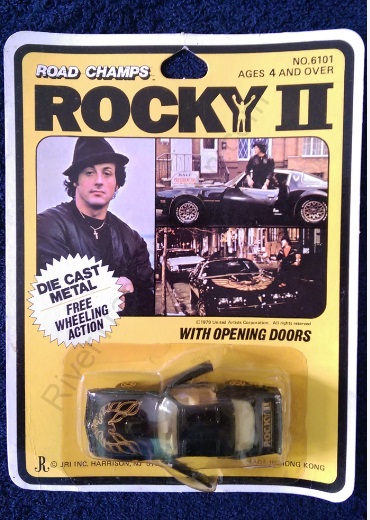
Rocky Balboa's Car - 1979 Pontiac Trans Am
My recent soliloquy on a 1981 Pontiac Turbo Trans Am jogged my memory about my buddy Bill's 1979 Trans Am. It was black and decked out in the full Smokey and the Bandit motif: gold pinstriping, gothic "Trans Am" decals, the giant gold "Screaming Chicken" sprawled across the hood, and those unmistakable gold snowflake wheels. In other words, it was the very definition of late-'70s disco-era automotive chic.
It was a beautiful car, and being Long Islanders, nobody gave Bill a hard time for looking like he was trying to channel Burt Reynolds. If anything, he got fist bumps for driving the same car Sylvester Stallone's Rocky Balboa buys with part of the purse from his rematch with Apollo Creed in Rocky II.
If that's news to you, then you've either never seen Rocky II or you've forgotten all about Rocky's gloriously reckless spending spree. Between the black-and-gold Trans Am, the lavish new house, the flashy clothes, and Adrian's expensive wardrobe, the Italian Stallion burns through his newfound fortune at a pace that would make a financial advisor break out in hives.
In retrospect, the producers' decision to cast a black Pontiac Trans Am in Rocky II makes it appear as though Rocky is paying homage to Burt Reynolds' Bandit from Smokey and the Bandit. Chronologically, that assumption makes sense. Smokey and the Bandit was filmed in 1976, released in 1977, and became one of the biggest box-office hits of the decade while Rocky II was being filmed in 1978.
Even so, the resemblance is almost certainly coincidental. By the late 1970s, the second-generation Pontiac Trans Am had become one of the most recognizable performance cars in America, and a black Trans Am with gold accents was hardly an unusual sight. While audiences naturally drew comparisons to the Bandit's car, there's no evidence that the filmmakers intended Rocky's Trans Am to be a deliberate homage to Burt Reynolds or Smokey and the Bandit. If anything, the similarity reflects the Trans Am's enormous popularity at the time rather than any conscious attempt to reference the earlier film.
Rocky II was a surprisingly good movie. Was it great? No. Far from it. But it didn't have to be anything more than it was to give fans of the Academy Award-winning Rocky exactly what they wanted: to see Rocky finally beat Apollo Creed outright.
Along the way to that oh-so-predictable climax, we watch Rocky and Adrian get married, buy a house, have a son, and, of course, Rocky blows a wad of money on a black Pontiac Trans Am. His spending spree, combined with a string of bad financial decisions and the reality that his boxing career has stalled, all but bankrupts the young family. Eventually, Rocky gives the Trans Am away because he can no longer afford it.
It's the Balboas' financial hardship that does more than anything to motivate Rocky to accept Apollo's relentless demands for a rematch. Well, that, and Adrian finally giving him her blessing with the unforgettable words: "Win. Win!"
As movie cars go, Rocky's Pontiac Trans Am has never enjoyed anything close to the lasting fame of the black-and-gold Trans Am from the original Smokey and the Bandit. That makes perfect sense. In Smokey and the Bandit, the Trans Am was practically a co-star, central to the film's identity and featured in nearly every chase and stunt. In Rocky II, the car served a very different purpose.
Rocky's Trans Am wasn't there to steal scenes. Instead, it was a visual shorthand for his sudden, newfound wealth. Having gone from an obscure club fighter to a man with a lucrative payday, Rocky spends money with the enthusiasm—and lack of restraint—of someone who has never had any before. He buys the flashy black Trans Am, a new home, expensive clothes, and other luxuries without giving much thought to the future.
It's one of the more enjoyable aspects of Rocky II because it's so believable. Rocky isn't portrayed as financially savvy; he's an uneducated, working-class guy suddenly flush with cash. His spending spree feels less like arrogance than the natural reaction of someone who never expected to have money in the first place. The Trans Am perfectly symbolizes that brief period of carefree excess before reality catches up with him and he has to step back into the ring.
Had Rocky's Trans Am been powered by Pontiac's own 400, the shaker would have worn the coveted "T/A 6.6" decals instead. Those cars came exclusively with four-speed manual transmissions, whereas every 403-powered Trans Am was fitted with an automatic. That makes Rocky's apparent struggle to drive the car rather amusing in retrospect—there wasn't a clutch pedal to fumble with in the first place.
The scene where Rocky lurches and surges down the street has long struck car buffs as more theatrical than authentic. Rather than depicting someone learning to drive, it looks more like Sylvester Stallone repeatedly stabbing the accelerator to make the car buck and jerk, creating the illusion of an inexperienced driver. The effect works for comedy, even if it doesn't make much mechanical sense.
Audiences certainly seemed to appreciate the gag. I distinctly remember the theater erupting in laughter during that sequence. The humor wasn't really about whether Rocky could drive a Trans Am; it was another way of showing that despite his newfound wealth, he was still the same awkward, unsophisticated South Philly kid trying to navigate a world that suddenly looked a lot different.
Of curious note, it's telling just how little thought the producers put into casting Rocky's car in II. Although the movie is ostensibly set in 1976—despite there being little, if anything, to actually establish that—Rocky's car is a 1979 Trans Am.
Is that quibbling? Perhaps. But this is a blog about cars, and nit-picking is what we do. Especially when it comes to movie cars.
Allegedly, at least one of the Trans Ams used in Rocky II still survives and is owned by someone in New Jersey. There are no shortage of stories about people owning surviving Trans Ams from Smokey and the Bandit, but the Rocky II cars have remained far more obscure.
My friend Bill's black '79 wasn't nearly so fortunate. He wrecked it on a rain-slicked road. Although it was repaired, the car was never quite the same afterward. He lost confidence in it and sold it not long after getting it back from the body shop.


.jpg)
.jpg)
.jpg)
.jpg)
.jpg)