Friday, April 19, 2019

1964 Plymouth Valiant - Defiant


Starting in 1960, GM, Ford and Chrysler began building small cars to compete with  import makes and models and AMC's fairly successful lineup of smaller cars. Chrysler even went so far as to create a new make of small cars they called "Valiant by Chrysler". However, the venture lasted only one year due to designs that were either too avante-garde or just too weird for most people's taste. Certainly not wanting to abandon the burbling smaller car market, Chrysler folded Valiant into Plymouth starting in 1961; easy enough to do too considering Valiant's were sold along Chrysler's and Plymouth's in the same showrooms in 1960. For 1963, Chrysler massaged out most of Valiant's inherent strangeness and came up with a benign if dorky looking little car. Our subject is a 1964 model.


Where the 1960-1962 Valiant's were obnoxiously expressive, the redesigned cars for 1963 were so bland it was as if the designers were defiant in their steadfast execution of a corporate edict to tone things down. The washed out yellow paint on our subject, black biscuits for tires and faceless, drab wheel covers certainly don't help matters either. At least it has vestigial tail fins but those would be sanded down come Valiant's total redesign to a boxy and even more generic model come 1967.


Chrysler's mid year introduction of an optional 273 cubic inch V-8 engine might have made our subject here an interesting little sleeper but, alas, she has but a 170 cubic inch in line "slant six" making all of 101 horsepower and 155 pounds of torque. Those are SAE gross ratings too so real world numbers are even less. If cars today are only considered amply powered if they can go from zero to sixty in seven seconds or less, imagine one that struggled to hit sixty in more than twice that time if not more. That's not to discount the engineering marvel that was Chrysler's first overhead valve six cylinder engine canted (or slanted) 30 degrees so it could fit under Valiant's hood, but still, 101 horsepower even in the early to mid 1960's was not a lot of go.


Our subject can't win for trying either. It's another example of how most sedan based convertibles don't work aesthetically top up or down. And that's to say nothing of how the chopped top makes the car shake and rattle on the road, the added weight of additional bracing impedes the performance of an already under-powered car and the swirling wind with the top down beats the daylights out of driver and passenger(s). Like I've said time and time again, people like the idea of a convertible but in reality they make miserable daily drivers and are best as weekend cars or even better, as rentals. 


Being the son of "Greatest Generation" parents, I was reared on the "Bigger is Better" axiom that "The Big Three" took to the bank for the better part of twenty years after World War II. Coming of driving age during the height of what is referred to as "The Malaise Era" as well, I looked at small cars with contempt - not hard to do given what they looked like back then regardless of the fact they were, relatively speaking, actually pretty good cars. 


But they weren't good enough. With questionable designs and even worse execution, it's not hard to see why the Japanese  have dominated small cars sales in the United States for the last sixty years. Also no wonder that they have done so well in the midsize market. You could argue that today, in general, American cars are the equal or better of imports and that's great and all but they've done so just as consumer tastes have shifted to "do it all and do everything well" cross over sport utility vehicles. A vehicle segment that continues to boom and is also dominated by imports. 

Monday, April 15, 2019

2019 Honda Accord - To CVT or Not To CVT...THAT Is The Question


When I was between jobs I'd taken a part time job working for a company that works with new car dealerships to move cars around. I'd be called to shuttle cars around at a dealership as well as between dealerships and even going to auction to pick up for sale what the dealership bought for later sale. For a car guy like me, the fringe benefit was the considerable wheel time with brand new cars. Fun. Well, that actually got old working exclusively with one dealership and for the most part, save for the time I went to the auction, one line of cars. In my case that was Honda's.

After several weeks schlepping Honda CR-V's, HR-V's, Accords, Civics and Ridegelines (I never got to drive a Pilot or Odyssey although I'm sure they ride and handle very similar to a Ridgeline), I have come to two conclusions. First, if you drive older vehicles like I do, you're missing out on a lot. Cars today, even the biggish Honda Ridgeline that I drove, are magnificent. Overall they perform at levels that would have been considered "sports car like" ten years ago not to mention twenty years ago. However, and I knew this beforehand but now I'm 100% convinced, my feelings about "constant velocity transmissions", or what are referred to as "CVT's" has been cemented; they are the bane of the modern, mostly Japanese, automobile. And depending on the application, Honda's turbocharged 1.5 liter 4 cylinder engine is simply over matched by just about everything they drop it into save for a Civic with a six speed manual.


That's a shame too considering how splendid most other aspects of the Hondas I drove where. Oh, and styling. Nothing Honda makes stirs my drink but that's beside the point. Folks who drive Honda's aren't buying them for their flashy looks. Anyway, oye, those damn CVT's.

I'd find it hard to believe that even the most clueless of drivers would not notice that some thing's askew with, for instance, a Honda Accord "EX-L" with a CV-T. The EX-L I drove yesterday was loaded to the front grill with every modern contraption available today on a car. Adaptive cruise control, lane change monitoring, emergency braking, 700 air bags and who knows what else. The one thing it wasn't equipped with was the optional 2.0 liter turbo engine making 252 horsepower and backed up with a god's green, earth, gear driven, 10 speed automatic. Funny how when it comes down to a vehicle that is supposed to be performance orientated they use a conventional transmission. And one with 10 forward gears. However, Honda uses a CVT in a 306 horsepower version of their venerable Civic Si so I believe Honda is eventually going to use CVT's across their entire lineup.


So, what is a CVT? Well, rather than bore you with a whole bunch of blah-bitty blah-bitty about pulley's and ratios and how CVT's differ from conventional transmissions with gears and fixed ratios, and you can read more about the damn things here, the idea behind a CVT is that they're supposed to enable a vehicle's engine to operate at peak efficiency all the time. Ok. I get that. But that comes at the expense of overall drivability. Especially in a heavy car that doesn't have enough motor; like the new Accord with the turbo 1.5.

For starters, you'd think a modern car with allegedly 192 horsepower would move off the line with some sense of urgency. Nope. Not an Accord with the 1.5 turbo and a CVT. It's almost as if the car's power train is distracted. "Oh, sorry. You want to move? Ummm, ok. Let's see...revs have to hit 3,000 rpm before we have enough torque to really go and...oh, here you go". That unresponsiveness is also accompanied by an engine drone, more like a moan, that if you didn't know better, makes the car sound and feel as though there's something wrong with the car.


There's an "S" and an "L" selection available on the shifter, I assumed they were for "sport" and "low" but putting the shifter in "S", for instance, while it did help improve "pick up" or what is referred to as "step in", RPM's jumped up more than 1,000 no matter how fast I drove the car. So much for efficiency. To get the performance you'd want your wallet gets slapped. This is progress?

On the open interstate and with the little 1.5 spinning freely, a stab of the gas does give you a pleasant push and the car passes eagerly but there's no mistaking the car for a Camaro SS - not that the Accord is supposed to be that but you get my point. As far as I'm concerned it's the mid 1970's all over again with still bloated hulks were saddled with performance robbing catalytic converters, low compression, smog gear saddled engines and microscopic axle ratios. Buyers back then had to be sold on "slow" being a good thing since a slow car was supposed to be good on gas.


Now, a car with a CVT with a really powerful engine, like the Nissan Altima I drove last Christmas, is a different story. That Altima moved with all the verve you'd expect out of a car with an absurdly good power to weight ratio and I was surprised to learn the car had a CVT. No surprise since Nissan finagled that CVT in the V-6 Altima to perform like a gear driven transmission. The CVT was seamless however, that overpowered red lump got only about 24 miles per gallon. Big deal. I have to ask again why so much time and effort is spent on CVT's in the first place. Especially with these crazy, eight, nine and ten speed automatics available today that really deliver on two attributes that years ago were mutually exclusive; performance and economy.

Mercifully, the Big Three for the most part have eschewed the use of CVT's. Ford used a CVT on their "Five Hundred" they peddled years ago, Jeep used one on older Compass' and Patriot's. Saturn used one has well on a smattering of makes and models. Domestics with CVT's have been (mostly) "captive" or rebadged imports.


I find that amazing seeing how for years now The Big Three have looked to Asia and Europe for hand holding on how to design, engineer and build automobiles. That's not a bad thing either but you'd think that CVT's would be coming to a domestic automobile near you in the very near future. But...there appears to be no sign of that. And that's a good thing as well.

As far as foreign makes and models go, well...to CVT or Not To CVT...THAT Is The Question. And I'll pass.


Thursday, April 11, 2019

1976 Dodge Charger - Would a Cordoba By Any Other Name Smell As Sweet?


The Chrysler Corporation certainly took their time responding to the personal luxury car juggernaut in the 1970's, an epoch that evolved out of the muscle car fad of the 1960's. Like a sophomore coming late to a keg stand, when they finally arrived in 1975 they came with four personal luxury cars simultaneously. All of them following General Motor's recipe of a long hood and short decked automobile built on a mid size chassis; Chrysler using their ancient but rugged mid size "B body"  chassis that could trace its roots back to Chrysler's ill fated downsizing of 1962. Chrysler, the division, had the most popular Chrysler personal luxury car with their Cordoba. A lot of the Cordoba's sales success was that it was hawked magnificently in a series of TV commercials by a pre "Fantasy Island" Ricardo Montalban. 


Across the showroom floor in Chrysler-Plymouth dealerships, Plymouth recycled their "Fury" moniker this time gluing it to a rather handsome hard top. They even peddled, for 1975 only, a "Road Runner" version with a "heavy duty" suspension and a standard 318 cubic inch V-8 with a two barrel carburetor. Somewhat more powerful engines were available than the 135 horsepower 318 but none them came anywhere near the fire breathing MOPAR powerhouses of even just five years prior. By the way, love the hardtop on this car and yes, those rear quarter windows rolled up and down. The 1975 Plymouth Fury was also available as an ungainly looking four door sedan. Oh, and starting in 1975, buyers were asked to not confuse the mid size Fury with the full sized and hold the "d", "Gran Fury".
 
 
Stand alone "middle child" Dodge got two personal cars for 1975. There was the Coronet coupe (above) that not only looked a lot like Plymouth's Fury coupe, the four door version was all but indistinguishable as well from Fury four door sedan. The big difference between the Coronet and Fury lines for 1975 was that Dodge also built a Coronet station wagon. 
 

 Curiously, Dodge also got a personal luxury car that sure looked like a Chrysler Cordoba. Well, for all intents in purposes, it was a Cordoba with save for a different front grill, tail lights and interior door panels. Some versions even had the Dodge trident logo on the steering wheel. To add insult to injury Dodge stooped so low as to call it "Charger". The pain. Oh, the pain. Would a Cordoba by any other name smell as sweet?
 
 
To say the 1975 Dodge Charger was not an attractive automobile is to say the say thing about the Chrysler Cordoba; and you know how I feel about the Cordoba. However, as they say, "what's in a name?" Well, in most cases it means nothing but in the case of Chrysler's four personal luxury cars in 1975, their 1975 Cordoba/Charger (and Coronet/Fury)  was the embodiment of badge engineering gone completely and utterly wrong. In comparison, General Motor's personal luxury cars had a familial resemblance but they were all distinctively different automobiles.


Legend has it that Richard Petty hated the new Charger so much he refused to drive it in NASCAR races. Instead, he drove a 1972 based Charger until, per NASCAR's provincial rules allowing discontinued makes and models to be raced for only three years after its body style is discontinued, 1978. Dodge, perhaps taking a note from "The King", redesigned what was the Charger for 1978 and rechristened it with another famed MOPAR moniker, "Magnum". Mattered little to Mr. Petty. He disliked that car as well and in 1978 switched allegiances to Pontiac and their new "Grand Prix". Taste, as always being like armpits and if nothing, being on the taste buds of the beholder.


Unfortunately, while 60% of Chrysler sales in 1975 were purportedly Cordoba's, and that success could be directly tied to marketing, Chrysler's quadruplicate of personal luxury cars did little to stave off the company's financial ruin and eventual near death. Cordoba sales dropped precipitously in 1976 and 1977 before a fairly extensive redesign of the original in 1978 that did away with a lot of what made the 1975 model distinctive. Again, that mattered little since they had issues larger than what a phalanx of niche targeted two door sedans could possibly remedy.
 
 
No doubt Chrysler's shameless badge jobs on these cars were due to their being strapped for cash after nearly two decades of bad decisions, horrible quality, bad timing and bad luck. They hardly had the resources to design, engineer and tool up to produce four distinctively different automobiles for their myriad divisions like GM was able to do.

Friday, January 25, 2019

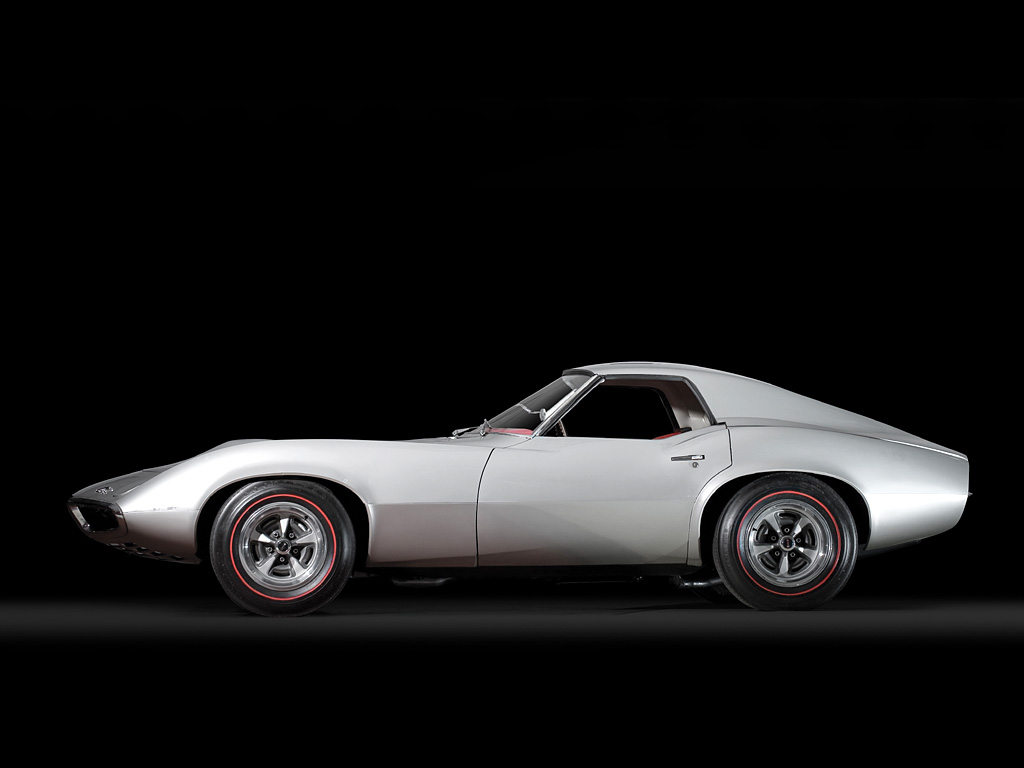
1964 Pontiac Banshee - Sex Bomb


The 1964 Pontiac Banshee was a concept or "dream car" I wish GM actually put into production. Many concept cars look silly or cartoonish but the Banshee was a sex bomb. Spy on me, baby.


Legend has it that it was the brainchild of then Pontiac division president and GM bad boy John DeLorean. Yes. That DeLorean. That's probably only partially true. What's more than likely closer to reality was that he collaborated with his team to create it and in an attempt to get it past GM upper management on the "fourteenth floor", he roused that is was to compete with the Ford Mustang. I think to give DeLorean sole credit for the Banshee not unlike like giving him singular credit for creating the GTO. A big engine in a small car? What a novel and unique idea, JD! In my opinion, the most important thing he did with the GTO was using his nerve and political moxy to sneak it past the stodgy suits upstairs. Unfortunately, he had no such luck with the Banshee.


So, why'd he even try? Well, you can't say the man wasn't doing his job trying to expand Pontiac's footprint within GM but even the most proactive people, regardless of their personal agenda, have to answer to someone; like it or not. Despite a number of successful product launches during his time at Pontiac, JD kept swinging for the fences until he tried to push something out that crossed head on into the lane of one of GM's sacred cows.


That cow being the Chevrolet Corvette and GM brass felt the Banshee would pinch its modest sales. At around 22,000 cars sold a year, because of its image, Corvette may have been a sacred cow but it was certainly no cash cow.  What's more, the Banshee was much smaller and lighter than the then current Corvette and even with a six-cylinder engine, on paper, it would have been quite a performer. With a V-8 it could probably destroy a Corvette in a drag race too. With the Banshee a two seater and a stronger performer it never stood a chance.


While it's readily apparent now that GM used several design cues from the Banshee on future designs, in 1964, the Banshee concept, as concept or dreams cars should, broke new ground and the fourteenth floor took notice.


They liked the Banshee so much that shortly after DeLorean's abortive attempt to get it approved for Pontiac, they called GM head of design Bill Mitchell and ordered him to work up a Chevrolet design based on it. That Chevrolet design exercise saw the light of day as the 1968 Corvette.

Wednesday, January 23, 2019

2005 Ford Mustang GT - The Beginning of a Beautiful Relationship


Buying an older car can be risky; especially buying an old sports car in the middle of winter in northern Ohio. Hopefully, with enough foresight, you can mitigate any potential problems. Well, any problems that you should or could be made aware of.

My wife and I weren't in the market for anything "new" per se, I'm seemingly always looking, but due to "cookies", when this little beauty popped up on my Facebook wall a couple of weeks ago I fell madly in love with it. No surprise, 2005-2008 Mustang GT's are the rare "modern" car that's on "my list". Much to my surprise and delight, my wife went nuts for it as well.


At fourteen this pony is no foal but she has just under 43,000 miles on her, I found it to be priced "correctly" and rides and drives like new. That's great but you have to take emotion out of any purchase like this and that's easier said than done on something as emotional as this. If I was to pull the trigger on the purchase, I had some stipulations. I wanted some cash knocked off the price, a thirty-day warranty, and gap insurance. Perhaps I was doing my best to kill the deal, after all, we don't need a sixth car, but doing my best, again, to mitigate risk, I didn't feel as though my asks were unreasonable.

They knocked $700 off the asking price without me blinking. Seeing that my sales person said the dealership doesn't haggle on price, she claimed to be amazed her almighty sales manager did that. Hmm, okay. I wasn't born yesterday and this certainly isn't my first car purchase rodeo but still, the gesture was nice. Besides, old cars like this on dealer lots are albatrosses. Banks don't like to loan money for them and finding cash buyers is hard regardless of the time of year but especially in winter. The warranty was a sticking point, though.


At first, my sales person said that although all of their used cars that don't have any balance from a factory warranty are sold "as is", they all come with a thirty-day warranty. Then she waffled and said that wouldn't apply on a car as old as this. Well, shoot. I told her that would be a deal breaker; I didn't feel comfortable buying a car this old without any protection. My brilliant, evil plan was to take the thing to a mechanic after I bought it and for just $53, they'd do a top to bottom diagnostic on it for me. They find anything wrong with the car the dealership would cover it.

She called me back the next day and said they'd make an exception and gave me thirty days. Now we were really getting somewhere. Good thing we really like the car.


Gap insurance? Well, that was a longer putt. Gap insurance protects you in the event your car is totaled and there's a "gap" between the car's book value and what your insurance company will write you a check for.  For instance, you pay, $10,000 cash for a car and a tree falls on it within a week of the purchase - if your insurance company will only pay out $6,500, that's a $3,500 punch in the face. With gap insurance, you don't have to worry about a gap.

The banks the dealership works with don't offer gap insurance but I found that if I financed the car through my insurance agency, gap insurance is included. What's more, because the car is so old, the banks the dealerships work with would only give me a loan at between 8-12%; the lower rate dependent on credit rating. State Farm got me a 36-month loan at 7.1%. Yes, that's high for a used car loan but reasonable considering the age of the car. Besides, we're only financing about $11,000 so the interest payments are fairly digestible.


So, we have a 2005 Ford Mustang GT that's in practically showroom condition that I paid relatively little for that has a warranty, albeit brief, covering repairs and gap insurance. I've got my fingers and toes crossed but this looks like the beginning of a beautiful relationship.

Friday, January 18, 2019

James Dean's Porsche 550 Spyder - Little Bastard


At sunset on Friday, September 30, 1955, 24-year-old James Dean was killed in automobile accident while heading to Salinas, California, for, ironically, a weekend of racing. He was getting 'wheel-time" in his recently purchased, 1955 Porsche 550 Spyder on highway 46 in Cholame, California roughly four-hours northeast of Los Angeles, when Donald Turnupseed, a 23-year old Cal-Poly student, driving a 1950 Ford Tudor, made a left turn at the intersection of highways 41 and 466 directly into Dean's path. Witness' claim Dean maneuvered right in an attempt to drive around Turnupseed, but collided all but head on into his substantially larger and heavier Ford. Dean was crushed by the impact, he suffered massive internal injuries, and his neck was broken. He was pronounced dead on arrival at Paso Robles War Memorial Hospital, nearly thirty miles away.


Turnupseed, a Navy veteran, said the setting sun at the time lent a "mirror effect" to the road and the color of Dean's car made seeing him harder still. There was no stop sign at the intersection. He was not charged in any wrongdoing and kept a low profile afterwards making a living as an electrical contractor. He died of lung cancer at the age of 63 in 1995. 


Dean's fatal car crash occurred just under a month before the theatrical release of, arguably, the most famous of his three films, "Rebel Without a Cause". Seeing how large his legend became, it's hard to fathom he only made three movies; seems there were many more. 


Reviews of "Rebel" were mixed, however, and it has not aged well. Dean's performance, without question remarkable and the best thing in it, was more like that of a marked-down Marlon Brando than the birth of an important talent. Watch the film today and you can't help but notice James Dean's "Jim Stark" seems out of place in it, not unlike seeing a Porsche 550 Spyder driven on an ordinary two-lane road. Despite the critics, the film was enormously influential; a milestone in the creation of new ideas towards young people. Brando is given much credit for initially blazing that path, Dean further stoking those flames Elvis Presly took to incendiary heights. 


Much like James Dean, his Porsche 550 Spyder was more than handsome and photogenic, it was supremely capable. 


Racing was the impetus for Porsche's creation of their lightweight, 110-horsepower, 550 Spyder. To be sanctioned by the 1.1- and 1.5-liter roadster class governing body, they mandated that Porsche have a "factory car" they could sell to the public. To qualify, they modified their 356 model removing its roof amongst a number of mechanical upgrades. They dubbed the roadster, "550 Spyder". 

As it pertains to automobiles, the term "spyder" purportedly stems from open, horse drawn carriages and their large, wooden wheels that resembled long legged spiders. There's considerable conjecture as to why the "i" in spider was replaced with a "y". 


Dean's car was one of only 90 550 Spyders made and one of only 43 "customer" cars, it was rarer still. Customer cars were cars Porsche sold to the public that were "street legal". With its "mid-ship" (mounted in front of the rear axle), air-cooled, 1.5-liter flat-four, dual overhead cam engine, locking differential, hand-built, tube-frame chassis under a wafer-thin aluminum skin, the Porsche 550 Spyder was the stuff of exotic car dreams. To some degree it still is. 


550 Spyders went on to 95 victories and 75 class wins over a total of 370 races helping to establish Porsche's legacy of producing high-performance automobiles; it won the first race it was ever driven in. Having a movie star die in one in an accident that was not only not his fault, forensic reconstruction of the accident concluded Dean was not speeding at the time of the crash, but also had nothing to do, per se, with the car itself, was, no doubt, a marketing coup for Porsche. Albeit a tragic if not maudlin one. 


Fanning the furor after Dean died, his friend, photographer Sanford Roth, was doing a photo expose for Collier's Magazine on his racing exploits at the time of the crash. This photograph, supposedly taken just moments before the crash, was shot by Roth as he was riding in the passenger seat of the Ford Country Squire Dean purchased as a towing vehicle when he bought the 550. Bill Collins, Dean's dialogue coach from the film "Giant", that Dean had just completed and was released in 1956, was driving. Dean's passenger in the above photograph is Rolf Wuthereich, a Porsche mechanic whom he befriend, who assisted Porsche customers interested in racing their cars. 

Miraculously, Wuthereich, although seriously injured when ejected from the car after impact with Turnupseed's Ford, survived. He had few if any recollections of the crash. 


Dean had traded in his Porsche 356 "Super Speedster" on his 550 taking delivery of it just 10-days before the accident that killed him. He had "Little Bastard" painted in washable paint on the the 550's hood (bonnet) to poke fun at Warner Brothers studio executive Jack Warner who referred to Dean as, "that little bastard" when he refused to vacate his temporary trailer after filming for "East of Eden" wrapped. Racers would have their race-registration numbers painted in washable paint since their numbers usually changed race-to-race. 


James Dean, while a gifted actor and an intelligent, albeit by many accounts a damaged, tortured soul, had premonitions of his early death. He told a pastor in his hometown of Fairmount, Indiana that, "the only success, the only greatness is immortality".  


When Alec Guinness first saw his friend James Dean's brand new Porsche 550 Spyder, he said, "if you get in that car they will find your body in it in a week". Dean laughed and said, "Oh shucks. Don't be so mean!"  Of his premonition of Dean's death in the Porsche, Guinness said afterward it was one of the oddest and spookiest experiences of his life.


Shortly before the crash and while he was filming his last film, 'Giant", Dean shot a public service announcement about safe driving. 


Thursday, January 17, 2019

Man Cave Makover - Dumpster Diving


My wife and I had been shopping for a 75 inch TV for our basement Man Cave for a long time but  every time I established a price point that one would have to be at for me to be comfortable with I found some lame excuse not to do it when I found one at that price. Too indulgent, too much money, we should downsize, blah, blah, blah.


Part of the problem was the original TV that we bought for the Man Cave found its way up to our den because of "input lag"; it's a video game thing where a TV, usually older, doesn't have enough of whatever to process the latest video game systems. There's no input lag on the 50 inch Roku we had in our den so I swapped them. So, with a 60 inch TV in the den and a 50 in the Man Cave, my wife and I haven't watched anything down there in quite a while because if we did, we'd be getting less of a visual experience. Hey, we have our standards. 


Dumpster diving anyone? My office has been undergoing a massive downsizing of late in square footage and a lot of "stuff" had been made available that we were allowed to rummage through and take home if we wanted. Chairs, desks, cabinets, monitors, shelving, carpeting, wall art and what not. And while I procured a chair or two, my biggest coup was scoring the 4 x 8, "Screen Innovations" video screen that was in this conference room we're losing. Ask and ye shall receive. Seriously, I think they were just going to throw it out.


Which is amazing considering how freakin' expensive these things are. Several years ago when we were setting up our Man Cave we toyed with the idea of a projector and screen and found the cost of a screen to be almost twice the price of a projector. I priced the "Screen Innovations" screens in my office and was stunned to find they run about $2,500. Holy smokes. Anyway, I figured I'd figure out the projector thing once I got the beast home; that being easier said than done.


For starters, it wouldn't fit in the elevators in my office so I had to walk it down eight flights of stairs. While not heavy per se, it certainly was not feather light and its size made going downstairs, by myself of course, quite challenging.


More than once I sort of tripped and almost either dropped it down the stairs or kicked a hole in it. Once outside, it wanted to take off like a kite as I was putting it in the back of one our office vans. To make matters even worse, once home, it barely fit the turn to go down into our basement. Luckily, it slid right down after I removed the stair banisters. Now, onto the projector.


Best Buy didn't have a large assortment of projectors, they did have a dizzying array of 50-82 inch televisions, but I bought an Epson 2150 for just to see what the experience would be like. As I swiped my credit card for an $800 purchase, in the back of my mind, I believed I could find something online that would be a fraction of the cost. Yeah, right. Anyway, while the projector was awesome, the cost was steep and I still needed a ceiling mount which would run another $150. Still cheaper and better all in than buying a 75 inch TV but still, $950 to upgrade a room we barely use anymore seemed lavish. Furthermore, seeing how fantastic the 2150 was, I didn't want to waste time buying less expensive projectors on line; not that I found any good deals on projectors that had good reviews anyway. I fought off pangs of guilt and tried to save money still by asking my I.T. guy if I could have the ceiling mount that the projector from the conference room we were losing had.


Well, he not only gave me the ceiling mount but he also gave me two Epson 8300 series projectors that were collecting dust in a back storeroom. Turns out our market president bristled at the cost of replacing the bulbs for the 8300's and insisted "I.T." buy LED projectors that would last longer. To top off the deal, he gave me an extra bulb which would fit either. Hard to imagine that, just like the screen, that all this stuff was going to land in a dumpster but apparently it was. Incredible.


After I gleefully returned the projector I bought I got to work reconfiguring the Man Cave for our 101-inch screen. The room had to be turned around since because of that bulkhead on the right, the screen would sit too low on the wall where the TV used to be. The projector can be at somewhat of an angle but in our case the angle would be too severe. I had some rewiring to do which took most of a Sunday afternoon and I have a lot of patching and painting to do but the end result was nothing short of mind blowing.

'
Take that 75 or even 82 inch big screen TV. Now, I could be wrong but I think they're making a 90 inch TV these days but that's like more than $5,000. Wow. Not that the cost of our Man Cave, had we actually paid for it, would have been cheap. $2,500 for the screen, $1,500 for the projector plus paying for installation would have pushed this project north of $5,000? Crazy. It's nice to be back down in the Man Cave, I think my wife likes it more than I do, and I have to tell you, with home theaters like ours it's no wonder people don't go out to the movies any more.