Sunday, September 10, 2023

1958 Buick Limited - Butter Like Topping


There are few '50's cars I'd reserve a space for in my "Jay Leno Fantasy Garage" and this 1958 Buick Limited is not one of them. Sheesh, this thing is like a cheesy, '50's sci-fi movie; I can't not look at it. Pass the popcorn and Jujubes before I get bored and move onto something else. 


Perhaps it wouldn't be so bad if the canvas this lay on wasn't so damn big. I mean, look at how much real estate is aft of the rear wheel here. At 227.5-inches long and a 79.8-inches wide, this is right up there with the some of the largest Yank Tanks ever manufactured. For the record, at 252.2-inches, the 1974-1976 Cadillac Fleetwood 75 is the longest vehicle every factory-produced for sale in this country. What's that you say? The '74 Fleetwood 75 was a limousine? Ok, Captain Details. Then as far as the longest conventional car goes, at 235.5-inches long, that trophy goes to Chrysler's 1973 Imperial LeBaron. 


In comparison, the car that technically inspired this juggernaut of this wonton excess, Chrysler's 1957 Plymouth and Dodge models, at 204.6 inches long, look positively athletic. And few would say those cars are svelte. Better looking '57 Chevrolet's perhaps but skinny? No. By the way, Chevrolet's seminal 1957 models, of which a space for a black-on-red Bel Air is waiting in my garage, are puny runts at just 200-inches long. 


So, what happened to cars in the 1950's? Why'd they get so big and so quickly? Especially those from my beloved General Motor's styling studios headed by Harley Earl? Good question. Seems that after a bevy of expensive engineering innovation, to maintain mid-1950's profit margins, rather than continue to innovate, they found it far more cost effective to simply add girth and tack on gimmicks. 


The legend or story behind this car and other freakish GM designs of this era, with perhaps the exception of the 1958 Chevrolet, was GM executives upchucked their liquid lunches when they got a hold of Chrysler's new-for-'57 "forward look" models. Just-like-that, they scrapped their plans for 1958 and 1959 coming with some of the most, dare I say, ridiculous looking automobiles of all time. While the "1959 Cadillac" is unquestionably the most famous of the era, the shaft-of-the-spear of that late '50's GM design axiom were their barge-like Buick's. Oldsmobile's a very close second. 


Buick had used the "Limited" moniker to denote their top-of-the-line models from 1936-1942 and they dusted it off for these one-year only brutes, sorry, ahem, beauties to commemorate their 50th-Anniversary. What made a "Limited" a "Limited" and made it more valuable or desirable than a run-of-the-mill Roadmaster? Nothing more than it was larger than anything else they offered, but there wasn't anymore leg room since it rode on the same 127-inch long wheelbase the Roadmaster did. However, buyers did get more chrome, cush, and more ersatz baubles and bits. My parents were of the generation that went bananas for cars like this so to that degree, I get it. To some degree anyway. Back then, "more was really more."


At the end of the 1958 model-year, though, these cars tanked at the box office and for several reasons. First of all, timing. Just as Buick took the bed sheet off these things, the nastiest economic downtown since the Great Depression struck cratering sales of large, expensive luxury cars. Didn't help that Buick charged more for these "Limited's" than Cadillac charged for a Series 62. Last and certainly not least, they was just plain fugly. Your opinion may vary, see dealer for details. And while you're doing that, please get me another box of Jawbreakers. 


Things got even nuttier at Buick for 1959 at Buick before Harley Earl retired and the cool, refined hand of Bill Mitchell took over lending his vision to create some of the best looking designs of all time. Funny how we have to push the envelope of good and bad taste to learn from our mistakes. 

Asking price for our '58 here is $10,000 which can buy a lot of movie theater popcorn. Please ask for a double serving of "butter-like-topping". 


Saturday, September 9, 2023

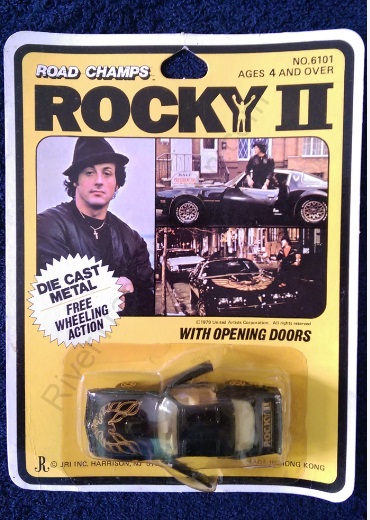
Rocky Balboa's Car - 1979 Pontiac Trans Am

My recent soliloquy on a 1981 Pontiac Turbo Trans Am jogged my memory about my buddy Bill's 1979 Trans Am. It was black and decked out in the full Smokey and the Bandit motif: gold pinstriping, gothic "Trans Am" decals, the giant gold "Screaming Chicken" sprawled across the hood, and those unmistakable gold snowflake wheels. In other words, it was the very definition of late-'70s disco-era automotive chic.

It was a beautiful car, and being Long Islanders, nobody gave Bill a hard time for looking like he was trying to channel Burt Reynolds. If anything, he got fist bumps for driving the same car Sylvester Stallone's Rocky Balboa buys with part of the purse from his rematch with Apollo Creed in Rocky II.

If that's news to you, then you've either never seen Rocky II or you've forgotten all about Rocky's gloriously reckless spending spree. Between the black-and-gold Trans Am, the lavish new house, the flashy clothes, and Adrian's expensive wardrobe, the Italian Stallion burns through his newfound fortune at a pace that would make a financial advisor break out in hives.

In retrospect, the producers' decision to cast a black Pontiac Trans Am in Rocky II makes it appear as though Rocky is paying homage to Burt Reynolds' Bandit from Smokey and the Bandit. Chronologically, that assumption makes sense. Smokey and the Bandit was filmed in 1976, released in 1977, and became one of the biggest box-office hits of the decade while Rocky II was being filmed in 1978.

Even so, the resemblance is almost certainly coincidental. By the late 1970s, the second-generation Pontiac Trans Am had become one of the most recognizable performance cars in America, and a black Trans Am with gold accents was hardly an unusual sight. While audiences naturally drew comparisons to the Bandit's car, there's no evidence that the filmmakers intended Rocky's Trans Am to be a deliberate homage to Burt Reynolds or Smokey and the Bandit. If anything, the similarity reflects the Trans Am's enormous popularity at the time rather than any conscious attempt to reference the earlier film.


The "Smokey and the Bandit-izing" of black-and-gold Pontiac Trans Ams is a fairly recent phenomenon. These cars were everywhere in the late '70s and well into the '80s, so it was only natural that Burt Reynolds' Bo "Bandit" Darville would drive one—it reflected contemporary automotive tastes rather than creating them. The same goes for Rocky buying one in Rocky II. To audiences in 1979, it wasn't a movie reference; it was simply the kind of car a newly successful boxer would buy. It's remarkable how the passage of time reshapes our memories of pop culture, turning what was once commonplace into something forever associated with a single film.

Rocky II was a surprisingly good movie. Was it great? No. Far from it. But it didn't have to be anything more than it was to give fans of the Academy Award-winning Rocky exactly what they wanted: to see Rocky finally beat Apollo Creed outright.

Along the way to that oh-so-predictable climax, we watch Rocky and Adrian get married, buy a house, have a son, and, of course, Rocky blows a wad of money on a black Pontiac Trans Am. His spending spree, combined with a string of bad financial decisions and the reality that his boxing career has stalled, all but bankrupts the young family. Eventually, Rocky gives the Trans Am away because he can no longer afford it.

It's the Balboas' financial hardship that does more than anything to motivate Rocky to accept Apollo's relentless demands for a rematch. Well, that, and Adrian finally giving him her blessing with the unforgettable words: "Win. Win!"


As movie cars go, Rocky's Pontiac Trans Am has never enjoyed anything close to the lasting fame of the black-and-gold Trans Am from the original Smokey and the Bandit. That makes perfect sense. In Smokey and the Bandit, the Trans Am was practically a co-star, central to the film's identity and featured in nearly every chase and stunt. In Rocky II, the car served a very different purpose.

Rocky's Trans Am wasn't there to steal scenes. Instead, it was a visual shorthand for his sudden, newfound wealth. Having gone from an obscure club fighter to a man with a lucrative payday, Rocky spends money with the enthusiasm—and lack of restraint—of someone who has never had any before. He buys the flashy black Trans Am, a new home, expensive clothes, and other luxuries without giving much thought to the future.

It's one of the more enjoyable aspects of Rocky II because it's so believable. Rocky isn't portrayed as financially savvy; he's an uneducated, working-class guy suddenly flush with cash. His spending spree feels less like arrogance than the natural reaction of someone who never expected to have money in the first place. The Trans Am perfectly symbolizes that brief period of carefree excess before reality catches up with him and he has to step back into the ring.


One of the enduring bits of Rocky II trivia is that four black 1979 Pontiac Trans Ams were reportedly used during filming, all of them equipped with the "6.6 LITRE" shaker decals. That seemingly insignificant detail actually reveals quite a bit to Pontiac enthusiasts. The "6.6 LITRE" decal signified the Oldsmobile-sourced 403-cubic-inch V-8, an engine Pontiac installed because its own 400 could no longer meet emissions requirements for cars sold in all 50 states. To many Pontiac purists, an Oldsmobile engine under the hood of a Trans Am bordered on heresy.

Had Rocky's Trans Am been powered by Pontiac's own 400, the shaker would have worn the coveted "T/A 6.6" decals instead. Those cars came exclusively with four-speed manual transmissions, whereas every 403-powered Trans Am was fitted with an automatic. That makes Rocky's apparent struggle to drive the car rather amusing in retrospect—there wasn't a clutch pedal to fumble with in the first place.

The scene where Rocky lurches and surges down the street has long struck car buffs as more theatrical than authentic. Rather than depicting someone learning to drive, it looks more like Sylvester Stallone repeatedly stabbing the accelerator to make the car buck and jerk, creating the illusion of an inexperienced driver. The effect works for comedy, even if it doesn't make much mechanical sense.

Audiences certainly seemed to appreciate the gag. I distinctly remember the theater erupting in laughter during that sequence. The humor wasn't really about whether Rocky could drive a Trans Am; it was another way of showing that despite his newfound wealth, he was still the same awkward, unsophisticated South Philly kid trying to navigate a world that suddenly looked a lot different.

Of curious note, it's telling just how little thought the producers put into casting Rocky's car in II. Although the movie is ostensibly set in 1976—despite there being little, if anything, to actually establish that—Rocky's car is a 1979 Trans Am.

Is that quibbling? Perhaps. But this is a blog about cars, and nit-picking is what we do. Especially when it comes to movie cars.

Allegedly, at least one of the Trans Ams used in Rocky II still survives and is owned by someone in New Jersey. There are no shortage of stories about people owning surviving Trans Ams from Smokey and the Bandit, but the Rocky II cars have remained far more obscure.

My friend Bill's black '79 wasn't nearly so fortunate. He wrecked it on a rain-slicked road. Although it was repaired, the car was never quite the same afterward. He lost confidence in it and sold it not long after getting it back from the body shop.


Friday, September 8, 2023

1975 Oldsmobile Cutlass Hurst\Olds W-25 - It Ain't No Rocket


My oh my, what do we have here today? A 1975 W-25 Hurst Olds Cutlass for sale near the old triple-wide here on the North Coast (Ohio) with an asking price $24,900. 

On the very tail end of the muscle car era, many would say, me included, it was already dead and buried by then, Oldsmobile continued to sell a Cutlass with a Hurst shifter, some "sporty" ornamentation, and larger roll bars. W-30 versions of this car came with Olds' 190-horsepower, 455-cubic inch V-8, don't call it a "Rocket" as they dropped that moniker for 1975, meanwhile our subject here makes do with the 170-horsepower Oldsmobile 350. Again, it ain't no "Rocket". Literally and figuratively. 


This iteration of the venerable bestselling Cutlass first debuted in 1973 and is part of GM's polarizing "Colonnade" series of intermediate that included a gaggle of makes and models across all of GM's divisions save for Cadillac. 


And why Cadillac never offered one is a question for the ages. If they did, no doubt it would have sold quite well, and Cadillac wouldn't have had to come with their Chevrolet Nova based Seville either. Can you imagine what Bill Mitchell's crew could have done with this large of canvas? 


Anyway, through my foggy goggles, of all the GM "Colannades", of which I'm generally a fan of, I think Olds designers missed the boat on these. From certain angles it's plain dowdy looking to me, like something Granny would drive. Derided for their massiveness, again they were allegedly intermediates, our '75 here suffers the additional ignominy of having its opera windows covered over, I guess they thought it made it look NASCAR-ish? Who knows but holy blind spots, Batman. Things got better for 1976 before Mr. Mitchell showered his pixie dust on the '77's. right before retiring. After that, everything went to hell in a t-topped hand basket. 


If you're here you probably know of the story of not only the Olds 4-4-2's but of Oldsmobile's on again, off again relationship with Hurst Transmissions of Warminster, Pennsylvania. The partnership started in 1968 and ran through 1975, then again in 1979 and finally 1983-1984. If anything, a "Hurst\Olds" looked sporty and powerful which I've always thought played against the Oldsmobile "type", but what do I know. Oldsmobile popped Cutlass' out like movie theaters pop popcorn and America gobbled them up. Amazing still that less than thirty-years later Oldsmobile went belly-up. 


Fun fact, before the "Lightning Rod" 1983-1984 H/O's, more H\O's were sold in 1975 than in any year prior which is somewhat ironic given it was the height of the "Malaise Era"; performance cars were verboten. Some 2,500 of them with roughly half being W-30's and W-25's, 


You could get your '75 H\O in either "Cameo White" or "Ebony Black". Swivel buckets, t-tops and even a hood ornament on our subject here. 


Don't be call clogging my email for more information on this now. Please. 


1981 Dodge Mirada - There's a Sucker Born Every Minute


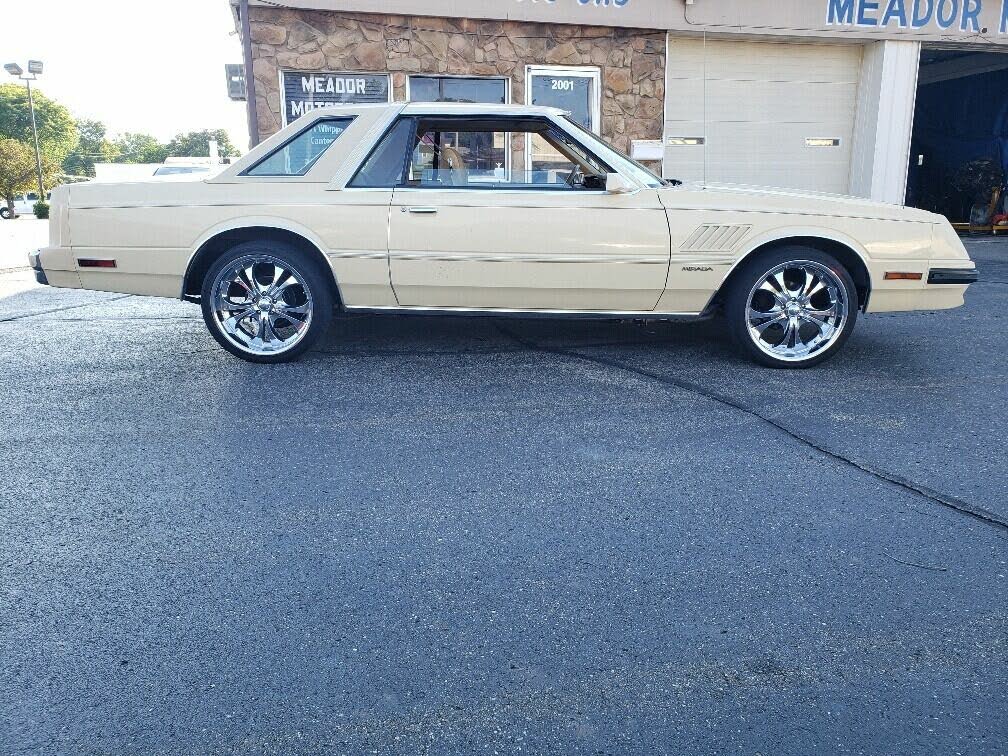
Here's something you don't see everyday and you didn't see many of them back in the early 1980's either. This is a 1981 Dodge Mirada (a what?) I found for sale on Facebook Marketplace. Asking price? Dramatic pause, please...$15,000. Yes, fifteen-thousand-dollars. Get this, it has 109,000-miles on its 42-year-old analog ticker too. I don't know what's crazier, the asking price or the "dubs" (wheels). Are those "20's"? Perhaps "22's"? How big do they make these things anyway? 


The Dodge Mirada was Dodge's replacement for their 1978-1979 Magnum which itself replaced their lightly disguised 1975-1977 Chrysler Cordoba clone they called "Charger". That Charger replaced their fabulous 1971-1974 vintage "fuselage" Charger that replaced the legendary 1968-1970 "General Lee" era Charger. The "General Lee" replaced the gruesome, sorry, that's harsh, 1966-1967 Charger. Got all that? 


Maybe the seller of this car will convince you that underneath its handsome but oh-so-angular sheet metal there's an updated version of Bo and Luke's steed but that's not the case. In fact, this car is more Plymouth Volare than anything as it rides on the Volare four-door's 112.7-inch long wheelbase. Dodge taking a page from Chevrolet and Pontiac's playbook - they too used the longer sedan version of GM's then current intermediate chassis to create their Monte Carlo and Grand Prix. That would be the 1969-1977 iterations of both not the farcical facsimiles that followed. 


Problem with this car being based on the Plymouth Volare was that the Volare rode on a mildly updated chassis that the Plymouth Duster was bolted to. The Duster harkened back to suspension technology that was questionably advanced at the end of the second Eisenhower administration. 


While I think the lines on this car are actually quite handsome, the way this car rides and handles is its weak point. Sure, it goes, turns and stops, but it doesn't do so happily or makes someone think they're a better driver than they are. It's solid-axle rear suspension combined with Chrysler's convoluted transverse torsion bar front set up didn't lend itself to laser precise handling prowess. Body-on-frame construction may have meant a nice, quiet, supple and compliant ride, but combined with seats that had little lateral support, this car's a handful to drive. To be safe, use both hands. And the large wheels and tires would only add to its primitive harshness. 


The passage of time has eroded away just how curious these cars were when they first came out in 1980. In the deepest throes of a second energy crisis in five years, and one that pushed the price of a gallon of gas over $1-per gallon for the first time, cash-strapped Chrysler came with this car (and a similar Cordoba and Imperial) that was not what the public wanted or needed at the time. Yeah, yeah, it came standard with a "Slant Six" bowing to fuel economy concerns of the times, but the golden days of the personal luxury car were coming to an abrupt end, a market segment once so molten hot cooling quickly into a boutique, niche market lump.  


That's not to say there's nothing to like about this car. There actually is plenty to appreciate. Again, I like it's angular lines although the front end, which emulates the 1978-1979 Magnum's, is wonky. The interior is at least cool looking, who doesn't love a "Tuff" steering wheel? The wheels are ridiculous but I'd look into whether or not the originals come with the car. Sometimes they do. This looks like it's for sale at dealership so maybe not. 


As far as the asking price goes, well, seeing how clean the engine is and that it's obviously had work done to it, is someone thinking they can recoup what they dropped on rebuilding it? How much could that have been?  I can't tell a Chrysler 318 from a 360 by just looking at it but safe to say that's nothing more exotic than a 360 down there. For '81, the only V-8 available on these cars was a 120-horsepower, 318-cubic incher fed with a two-barrel carburetor so if this is in fact a 360, it's a transplant. Throw in a 2.47:1 rear end and in stock guise, you'll have waited roughly 15-seconds for 60-mph to roll around and nearly 20-seconds for the quarter mile. At just 73-mph.  


The B&M shifter is a curious, sporty looking addition but this install here is not without issue s. Let's assume it works properly, but who ever put it in didn't change the steering column out. Look closely and you'll see the stock shifter on the column. Yes, that's major surgery and good luck finding a shifter free column but still, for $15,000 you'd expect more. 


J.D. Power pegs one of these high retail at $2,500 so there's a gigantic spread between "book value" and retail asking price here. To me, it's an insurmountable gulf, I mean, what are you going to do, offer half the asking price and hope to split the difference? Ten- or eleven-grand is still way too much money for this but as my friend in the business says there's an arse for every seat. And as P.T. Barnum is credited with saying, "there's a sucker born every minute". 

Thursday, September 7, 2023

1981 Pontiac Turbo Trans Am - You Rather Have Been Smart or Good Looking?


A girl in my high school had a brand-new Turbo Trans Am just like this '81 in luscious dark red. Beautiful car. She was way out my league too. The fact she not only drove a brand-new car but a Turbo Trans Am made her "Hollywood" in my eyes. 

I thought her car fitting for her as it was as unapproachable as she was. I'll give her the benefit of the doubt that she wasn't as shallow as these cars were. "All show and no go" as they say. Or, "all fluff and no stuff". Didn't matter because they both looked so damn good. The world's at your beck and call when you're young and beautiful. Everything comes out in the wash, though. 


On the heels of a surge in popularity after "Smokey and The Bandit" shot Trans Am's to the pinnacle of the public's automotive awareness, to be in compliance with federal fuel economy and emissions regulations, Pontiac had to drop the big engines that powered the Bandit era T/A's. Rather than stuff T/A's with the Chevrolet 350-cubic inch V-8 that powered Camaro Z/28's and Corvette's, Pontiac bolted the same Garret turbocharger Buick used on their blown 231-cubic inch V-6 to their 301-cubic inch V-8. An underwhelming legend was born. 


It wasn't all bad. At maximum boost, the turbo 301 spooled up 210-horsepower and 345-foot pounds. Not bad. Actually, on paper, that's more torque than the Pontiac 400 that made Bo Darville's car go. For the record, all the T/A's in Smokey and The Bandit, the original not the farcical sequels, were 1976 T/A's with the front ends from 1977 models affixed to them. There are conflicting stories about what was under the hood of the six T/A's used in "Smokey". For 1976, the standard Trans Am engine was Pontiac's 400-cubic inch V-8 and their 455 was optional. For 1977-1979, if a Trans Am has "T/A 6.6" on the Shaker, it has a Pontiac 400. If it says "6.6 LITRE", yes, "LITRE", it has Oldsmobile's 403-cubic incher. 


Problem was, the boost got spent quickly and after the reserve was gone, the engine wind milled. Buick's much smaller V-6 wasn't any better of course and GM only figured out how to make those engines run right with the advent of port fuel injection. Pontiac had planned to further refine the turbo 301 but GM scuttled Pontiac's engine program negating them to only pushing out (4-cylinder) "Iron Dukes". Fun fact, there's a hood bulge on 1982 and 1983 T/A's that was to make room for the turbo 301. 


My time in "Bandit era" T/A's was less than enthralling, perhaps not unlike going on a date with that girl that had that dark red '81 in high school. I found the ride harsh, flinty and truck like. Squeaks, rattles and moans and groans galore. They did handle well, everything is relative, and of course the big engines made the cars fly. And they looked so good. Damn. 


Back in high school, would you rather have been good looking or smart? 


Tuesday, September 5, 2023

1998 Jaguar XKR - Meow


Not many vehicles survived a protracted production run with as little outward change as Jaguar's 1975-1996 XJS. Granted, during those 21-model years, Jaguar made incremental changes, but wholesale, ostensibly, it's easier to tell a 1968 Corvette from a 1982 than it is to tell a 1975 Jaguar XJS from a 1996, a 1972 Mercedes-Benz SL from a 1989 as well. That all changed for model-year 1997 when Jaguar introduced the XK8 convertible and coupe. In one fell swoop, all the angst of waiting two-plus decades for a new Jag seemed like time well spent, the new XJS was an instant classic and satisfying in ways Chevrolet's long overdue replacement for the 1968 Corvette was disappointing, to some degree Mercedes-Benz 1990 SL as well. Jaguar followed it up in 1998 with a sporting "XKR" model. Our subject here is a "cheapie" XKR Facebook Marketplace find from 1998 and despite my knowing better, I want it. And I want it bad. Really bad. 


The differences between a regular, run-of-the-mill XJS, as if there is such a thing, and an XKR are few, you'd never know one from the other unless you knew or what told what to look for. Using the best of their own along with what they borrowed from others, Jaguar tuned its Computer Active Technology Suspension (CATS) on XKR's to ride firmer, or more sporting, on top of one-inch larger rims and tires. Mercedes calibrated their ZF, five-speed automatic transmission with shorter, more aggressive ratios and last but not least, Ford, with whom they were under the control of, bolted the same twin, air-to-liquid intercooled superchargers they strapped to the engine in their SVT Ford F150 Lightning pickup truck to Jaguar's "AJ", 4.0-liter V-8. Who says the filthy rich can't enjoy a Sloppy Joe?  


Ford's superchargers blew up horsepower on the AJ to 370 from 290 and torque swelled to 387 from 294 foot-pounds. Hardly numbers to brag about today, but back in the days of the second Clinton administration, an XKR's 5.1-second, 0-60 run was heady stuff. Incidentally, we tell an XJS is an XKR primarily by these luscious vents in the hood or what they refer to "over-there" as the bonnet. They are somewhat functional, cool air does flow through the vents, but there's no plumbing that helps ram the colder, denser stuff into the engine. So, they're more like seams on black stockings, they're alluring and by definition technically function, but they're there for appearances mostly. Meow. 


Just 206,0000-kilometers on this one's digital ticker, that's 128,000-miles to us knuckle draggers, and has an asking price of just $7,995. Seems like a bargain until you get a hold of yourself and remember this isn't a 27-year-old Lexus but a 27-year-old Jaguar. That means a mixed bag of disparate baubles and bits of questionable reliability that's, again, old. Really old. Speaking of tech, don't look too closely otherwise you'll notice that this thing is squatting at the front - something tells me there's something askew with its funky CATS suspension set up. That looks expensive to fix. Maybe there's a kit to bypass the CATS, who knows. Don't count on finding parts at the Pull-A-Part. 


Amazingly, factory navigation systems are still a thing even though it's pretty obvious they're on their way out. Or should be. Back when our XKR's wood trim was new and shinier, the  thought of getting directions on our phones was inconceivable. It's just a matter of time, though, before the economics of manufacturers offering in dash systems stops making sense. And do they even make updates for these old DVD-based systems? Shame they dedicated so much real estate on the dash to this too. I'd turn this into a picture holder. 


Average book on these is just $7,000, sometimes "classic" doesn't necessarily mean, "valuable", these stickered for more than $80,000 when new. This XKR reminds me of my late friend Dan who bought a 1985's BMW 528 years ago for around $1,000. He called it his, "one-thousand dollar, two-thousand dollar car" because every time something on it went, and that was quite often, it ran him $2,000. To which I say, "damn the torpedoes", get in my garage you sweet minx and maul my bank account, don't make me beg. 


Saturday, September 2, 2023

1993 Mazda MX-6 LS - A Dandy of a Little Car


Figures that I find this 1993 Mazda XM-6 LS for sale after I made a recent "cheap car" purchase. Just as well as my wife and I are quite happy with our friend's 2009 Toyota RAV4 I took off his hands about six-weeks ago. It ain't perfect but for four-grand, these days, it's the buy of a lifetime. Still, kind of stinks this popped up now because as much as we love our "new-to-us" RAV, nothing beats the way a good car rides and handles. And this car is a very good riding and handling car. Dare I say great. 


It's got the Mazda V-6 too albeit it their teeny, tiny 2.5-liter, DOHC, 24-valver that makes all of 164-horsepower. Ford used this engine in their Contour\Mercury Mondeo twins and their version of this car, the Probe GT. While a smooth runner, it's got nothing on the pot-whoppin', 269-horsepower, 3.5-liter V-6 in our RAV that hauls it like a fighter jet off an aircraft carrier. Gas mileage with our RAV is better too - EPA estimates for this engine were 21-city, 26-highway, I'd hedge the actual number closer to the city number. Our RAV gets a consistent 25-27 miles per gallon highway. I've pulled down 28-mpg on occasion too; around town it's a different story but I don't do a lot of "city" driving. 


Oh, man, it's a got Mazda's sweet 5-speed too, that ups the fun factor ten fold for me. Clutch on these things is sublime as well. Steering is "right now" responsive and the brakes are hard wired to your brain and right foot. Damn, where was this thing when I was looking?  


Only thing I can ding this car for is it's just not the most handsome thing in the world. Ford's Probe of this vintage was a better looking car, in my opinion, they did a terrific job of making it look like a whole lot more than this is. And it's red. Red's might be my favorite color but not on a car. That's ironic since I've five red cars in my life. The dark belt line molding does the lines of this car no favors either. Yuck. 


Mazda's first MX-6 debuted in 1987 and it was rumored at the time that Ford was going to use it as a replacement for their Mustang. That's always seemed like a publicity stunt to me but I get why and how Mustang fans got their hoofs all up in a pinch. Styling wise anyway. Behind the wheel, the circa 1979 Fox-body Mustang couldn't hold a candle to it. Especially the updated 1993-1997 models. The Mustang rode and handle like a crummy truck, these handled so well they made you a better driver. 


As much as I want this, I can't do the mental gymnastics necessary to make this work for my wife and I.  Especially with an asking price of $6,400. Although it's only got 76,000-miles on its thirty-year-old ticker, it still is a thirty-year old car albeit a Japanese one. Seriously, I think Japanese cars age but one-year for every year an American car ages two, or three. Good luck finding parts for it too and since it's OBD-I, best wishes to you finding a mechanic who can work on it. 


If I've learned anything, luck and timing are as important or more important than anything else in life. When we're young, we don't realize that. Which is a good thing otherwise we'd all sit around waiting for things to happen. It's said the harder you work the luckier you get and I've found that to be true. Sometimes it just doesn't work out and thing's just aren't meant to be and that's fine. Someone else will get a dandy of a little car here.